Greek Education: How Training Built Citizens and Soldiers
Greek education was not designed to transfer knowledge. It was built to produce a specific type of person—someone prepared to function within the structure of the city. What students learned, how they learned it, and when they learned it were all determined by this goal.
In practice, education in ancient Greece varied by place, but it followed a clear logic. Training began early, progressed in stages, and combined intellectual, physical, and social development. Reading, music, and physical exercise were not separate subjects; they worked together to shape behavior, discipline, and thinking.
This system answered practical questions. How do you prepare citizens to participate in public life? How do you ensure discipline, coordination, and shared values? Education became the mechanism that aligned individuals with the needs of society.
To understand Greek education, it is not enough to list subjects or compare cities. The key is to see how the system works—how training is structured, what it aims to produce, and how it connects learning with the role each person is expected to play.
What Is Greek Education?
Greek education is a structured system designed to shape individuals according to the needs of the city. It combines intellectual training, physical discipline, and social conditioning into a coordinated process.
At its core, it follows a clear progression. Training begins in childhood, where basic skills and habits are established. It then develops into more advanced instruction, where reasoning, behavior, and physical ability are refined. Each stage builds on the previous one, ensuring continuity rather than fragmentation.
The content of education is not the defining factor. Reading, music, and physical training are tools, not ends in themselves. What matters is how these elements work together to produce a consistent outcome: individuals who think, act, and behave in ways that align with the structure of their society.
This system removes randomness. Learning is not left to personal preference, but organized around a defined purpose. Education becomes a process that prepares individuals for specific roles rather than simply providing knowledge.
| Stage | Focus | Outcome |
|---|---|---|
| Early Training | Discipline and basic habits | Controlled behavior |
| Structured Learning | Reading, music, coordination | Pattern recognition and consistency |
| Advanced Development | Reasoning and physical refinement | Prepared social role |
Why Education Was Essential in Greek Society
Education in ancient Greece was necessary because the stability of the city depended on how individuals were formed. Public life required participation, discipline, and coordination, and these could not be assumed without structured training.
In systems where decisions, debate, or collective action were central, individuals needed to think clearly and act within shared rules. Education provided this foundation by establishing habits of behavior and patterns of reasoning that could be applied consistently.
It also ensured continuity. Values, expectations, and roles had to be reproduced across generations. Without a structured system, this transfer would be uneven, leading to instability in how the society functioned.
Education, therefore, was not optional or secondary. It was a mechanism that aligned individuals with the needs of the city, making collective life possible without constant enforcement or correction.
The System of Greek Education
Greek education operates as a staged system where each phase builds specific capacities required for adult roles. It is not a collection of subjects, but a progression that moves from basic formation to structured competence.
The first stage focuses on habit and discipline. Early training establishes behavior, coordination, and control. At this point, the emphasis is not on abstract knowledge, but on shaping how the individual responds and acts.
The second stage introduces structured learning. Reading, music, and guided instruction develop memory, rhythm, and the ability to follow patterns. These are not isolated skills; they train attention and consistency.
The final stage refines thinking and physical ability according to the role expected in society. Reasoning becomes more explicit, physical training more demanding, and behavior more controlled. The individual is prepared to function within a defined system rather than act independently of it.
What defines this structure is continuity. Each stage reinforces the previous one, ensuring that learning is cumulative and directed toward a clear outcome.
Two Educational Models: Training Citizens vs Training Soldiers
Greek education does not follow a single model. Different city systems required different outcomes, and education was adjusted accordingly. The variation lies in the goal, not in the existence of structure.
One model is designed to produce citizens capable of participating in public life. Training emphasizes reasoning, communication, and controlled behavior. Intellectual development and social awareness are central, as individuals are expected to engage in discussion and decision-making.
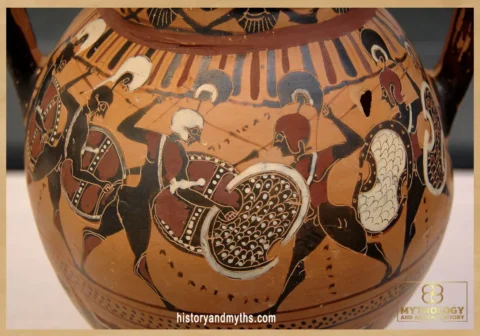
The other model is built to produce disciplined soldiers. Training focuses on physical endurance, coordination, and obedience. The system reduces individual variation and reinforces collective action, ensuring that behavior remains consistent under pressure.
Both models follow structured progression, but they prioritize different capacities. One develops the ability to think and participate, the other the ability to act and conform. The difference is not in the presence of education, but in what that education is designed to produce.
Greek Education — Core Insight
Greek education was a system designed to produce specific types of individuals rather than simply transmit knowledge. It combined intellectual, physical, and social training into a unified process.
What defines this system is its purpose. Every stage of learning contributes to shaping behavior, thinking, and capability in alignment with the needs of society.
© historyandmyths.com — Educational use
What Students Actually Learned
Greek education uses specific subjects as tools to develop controlled abilities rather than isolated knowledge. Each area of learning contributes to a broader objective.
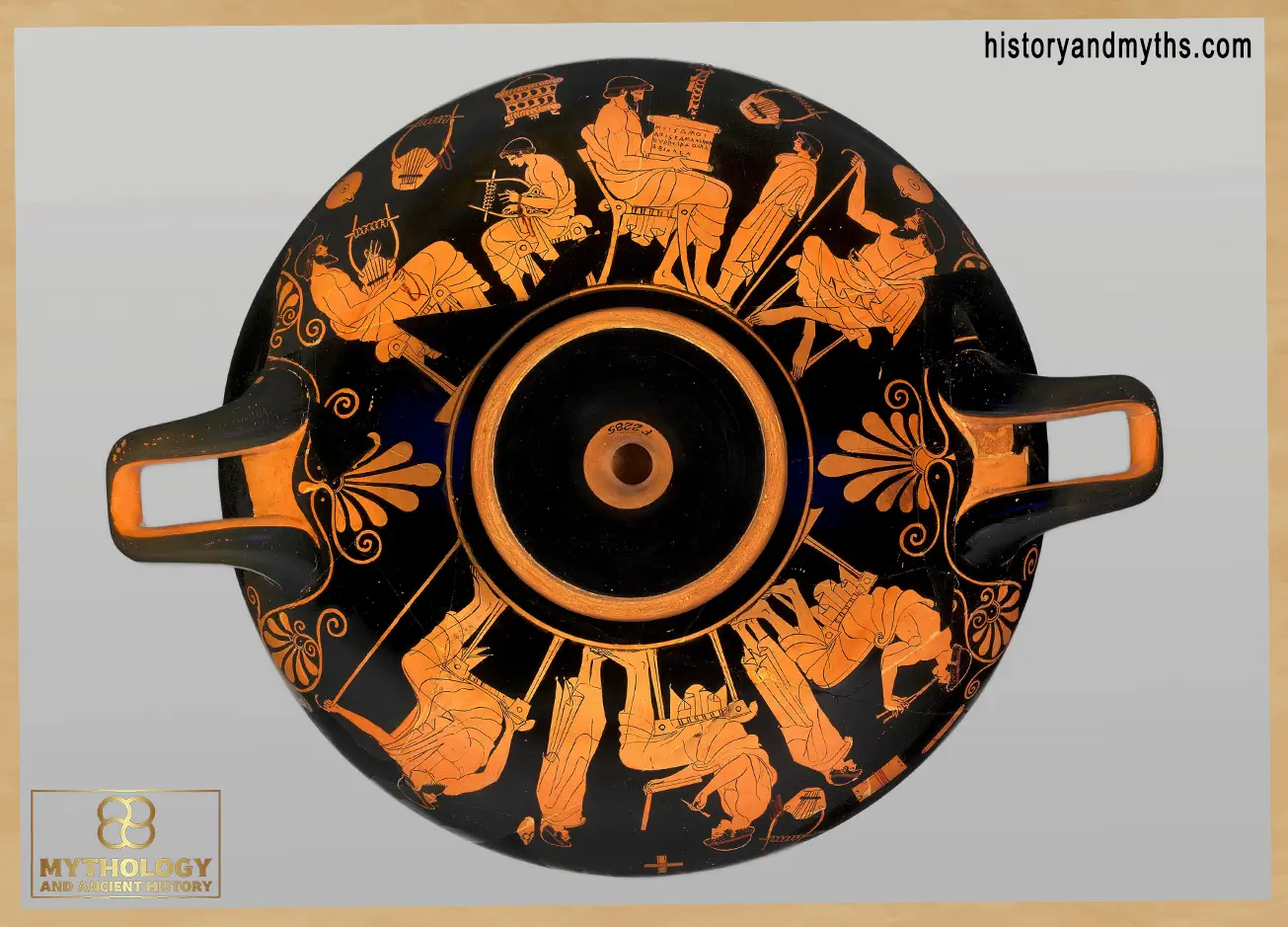
Reading and writing establish basic literacy, but their function extends beyond communication. They train attention, memory, and the ability to follow structured information. This creates a foundation for more complex reasoning.
Music is used to regulate rhythm and behavior. It develops coordination, timing, and sensitivity to patterns, which supports both intellectual and physical control. It is not treated as entertainment, but as a method for shaping internal balance.
Physical training builds strength and endurance, but also discipline. Movement is structured to reinforce control over the body, ensuring that action remains precise and repeatable.
These elements are combined rather than separated. The goal is not mastery of individual subjects, but the integration of skills that produce consistent behavior and clear thinking within a defined system.
How Education Shaped Thinking and Society
Greek education shaped thinking by training individuals to follow structured patterns rather than act on impulse. From an early stage, learning emphasized control, repetition, and clarity, which influenced how problems were approached later in life.
This training made reasoning more systematic. Ideas were not expressed randomly, but organized and connected. The ability to follow arguments, respond within defined rules, and maintain consistency became part of how individuals operated.
At the same time, education shaped behavior within society. Individuals learned to act according to shared expectations, reducing conflict and unpredictability. This allowed larger systems—political, social, and cultural—to function without constant disruption.
The result is a direct connection between education and structure. The way people were trained influenced how they thought, how they interacted, and how the society as a whole operated.
Greek Education vs Modern Education
Greek education is designed around a single objective: shaping individuals to fit a defined social role. The system is unified, with each stage and subject contributing to that outcome. Learning is controlled, and variation is limited.
Modern education operates with multiple objectives. It aims to provide knowledge, develop skills, and allow for individual choice. Subjects are divided into specialized fields, and progression is less strictly unified.
This difference affects how learning is structured. Greek education builds continuity, where each stage reinforces the same direction. Modern education introduces flexibility, allowing individuals to move between paths and areas of interest.
The underlying method also differs. Greek education emphasizes discipline, repetition, and controlled development. Modern systems rely more on exploration, analysis, and adaptation.
Despite these differences, both address the same problem: how to prepare individuals to function within a larger system. The distinction lies in how structured that preparation is and how much variation it allows.
Continue Reading
Why Greek Education Still Matters
Greek education remains relevant because it presents a clear model of how learning can be structured to produce consistent outcomes. It shows that education is not only about transferring knowledge, but about shaping how individuals think and act.
The core principle still applies. Effective learning requires progression, reinforcement, and alignment between what is taught and what is expected. When these elements are coordinated, education becomes more than information—it becomes a system that builds capability.
This approach highlights a key idea: outcomes depend on structure. Without a clear system, learning becomes fragmented and less effective. Greek education demonstrates how a unified process can guide development from early stages to functional competence.
What endures is not the specific content, but the logic behind it. Education works best when it is designed with purpose, continuity, and control over how skills are developed and applied.
Key Takeaways
- Greek education is a structured system, not just subjects
- It aims to produce specific social roles
- Learning progresses through defined stages
- Subjects are tools, not goals
- Education shapes both thinking and behavior
- Different systems serve different societal needs
- Its principles still apply to modern education
Frequently Asked Questions
What was Greek education?
Greek education was a structured system designed to prepare individuals for specific roles in society.
Why was education important in ancient Greece?
It ensured stability by shaping behavior, thinking, and social roles.
What did students learn in Greek education?
They learned reading, music, and physical training as part of a unified system.
How was Greek education structured?
It progressed through stages from basic discipline to advanced development.
What is the difference between Athenian and Spartan education?
Athenian education focused on citizens, while Spartan education focused on soldiers.
How did Greek education influence society?
It shaped how individuals thought, behaved, and participated in social systems.
Is Greek education relevant today?
Yes, its structured approach still influences modern educational systems.
Sources & Rights
- Marrou, Henri-Irénée. A History of Education in Antiquity.
- Beck, Frederick A.G. Greek Education.
- Pomeroy, Sarah B. Spartan Women.
- Cartledge, Paul. Sparta and Lakonia.
- Golden, Mark. Children and Childhood in Classical Athens.
- Kennedy, George. Classical Rhetoric.
- Too, Yun Lee. The Pedagogies of Classical Greece.
- Robb, Kevin. Literacy and Paideia.
- Davidson, James. Courtesans and Fishcakes.
- Hadas, Moses. A History of Greek Literature.
- Ober, Josiah. Mass and Elite in Democratic Athens.
- Garland, Robert. The Greek Way of Life.
- Hale, John R. Lords of the Sea.
- Adkins, Arthur. Merit and Responsibility.
- Freeman, Charles. The Greek Achievement.
- Highet, Gilbert. Paideia.
- Bowen, James. A History of Western Education.
- Too, Yun Lee. Education in Greek and Roman Antiquity.
- Cartledge, Paul. Ancient Greece: A History in Eleven Cities.
- Osborne, Robin. Greece in the Making.
Written by H. Moses — All rights reserved © Mythology and History