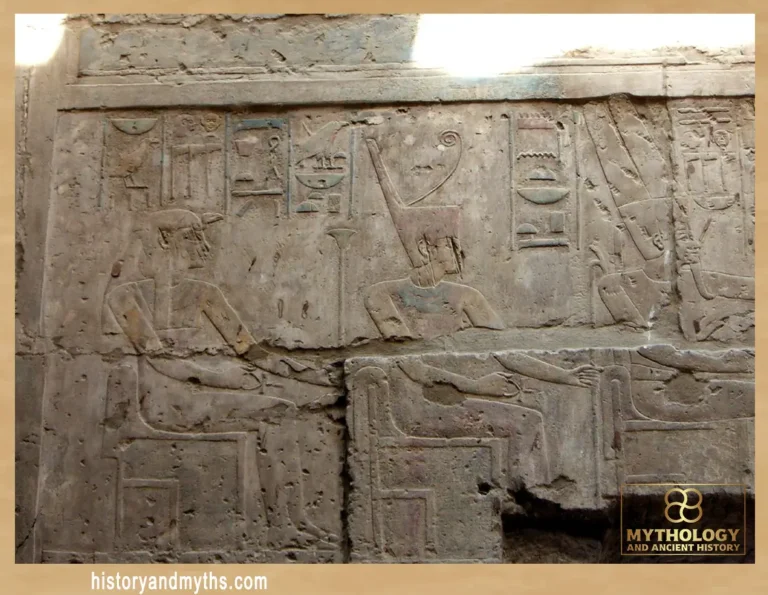
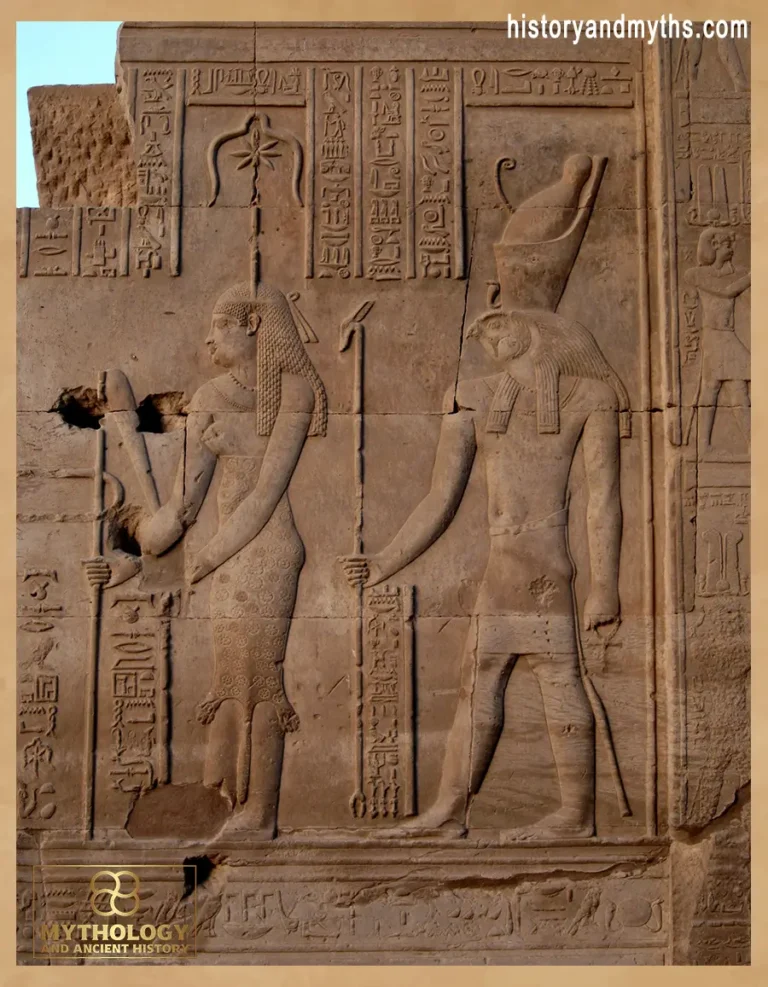
Goddess Hatmehit, The Nile Delta’s Fish Goddess of Ancient Egypt
Among the many local deities that shaped daily life in Ancient Egypt, Hatmehit stands out not because she was powerful or central, but because she represents something deeply human: the quiet, life-giving presence of water in a land that depended on the Nile for survival. Her name often interpreted as “She Who Is Foremost of the Fish” anchors her identity firmly in the world of riverbanks, marshes, and the fertile floodplain.
Hatmehit does not appear in grand myths or temple reliefs stretching across dynasties. Instead, she surfaces in brief inscriptions and regional traditions from the Delta, where fish, nets, and flowing water were part of daily existence. This makes her a window into the spiritual lives of ordinary Egyptians those whose beliefs were shaped not by royal theology, but by the river that sustained them.
Though rarely featured in major narratives, her presence reflects a simple truth: in a civilization built on the Nile, even the smallest deity of water held meaning. Hatmehit embodied abundance, sustenance, and the gentle rhythm of life carried by the river’s rise and fall.
Hatmehit’s Origins and Regional Role in the Nile Delta
Hatmehit’s identity is shaped almost entirely by the region that worshipped her. Unlike the great goddesses whose influence covered all of Egypt, Hatmehit belonged to the Delta towns where fishing, marshland life, and river abundance defined the rhythm of each day. Her name itself “Foremost of the Fish” captures the practical, grounded nature of her worship.
Most references to her come from the ancient city of Mendes, a cult center in the northeastern Delta. This was a landscape of water-channels, reeds, and rich animal life, where the presence of fish meant food security for local communities. It is in this context that Hatmehit flourished: not as a cosmic power, but as a guardian of local prosperity, the steady flow of fish, and the health of the river’s ecosystem.
Her role also reveals something profound about Egyptian religion. Deities did not need vast temples or royal patronage to matter. A goddess like Hatmehit could exist primarily within one region and still hold deep meaning for the people who lived there. She represented the dependable generosity of the Nile something Egyptians trusted more than mythic drama.
The scarcity of long inscriptions about her is not a sign of insignificance, but a reflection of how Egyptian spirituality operated at the local level. Hatmehit was woven into everyday life, invoked not for cosmic order but for sustenance, fertility, and the quiet blessings of flowing water.
| Aspect | Details |
|---|---|
| Name | Hatmehit “Foremost of the Fish” |
| Primary Role | Local goddess of water, fish, and nourishment in the Nile Delta |
| Cult Center | Mendes (Djedet) in the northeastern Nile Delta |
| Symbol | Fish emblem; water motifs |
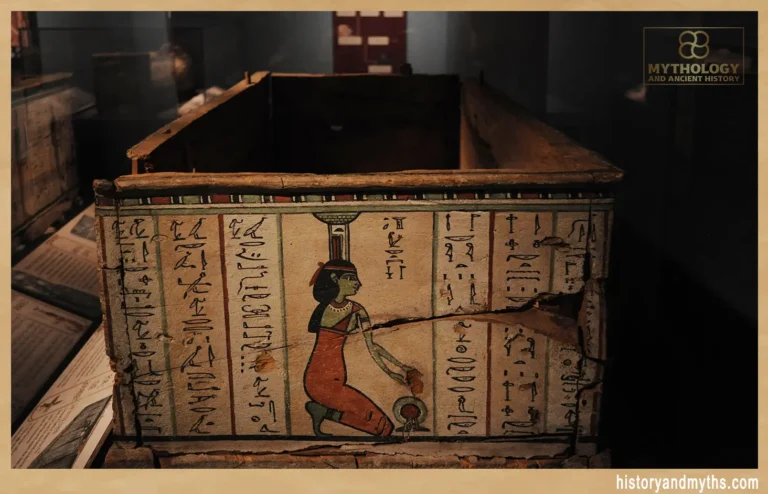
| Depictions | Human woman with a fish emblem above her head; water-themed imagery |
| Associations | Consort of Banebdjedet in the Mendes Triad |
| Domain | Nourishment, fertility, marshlands, and river abundance |
| Legacy | Endured as a symbol of the everyday blessings of the Nile |
Why Did Fish Matter in Ancient Egyptian Religion?
Hatmehit’s Connection to the Mendes Triad
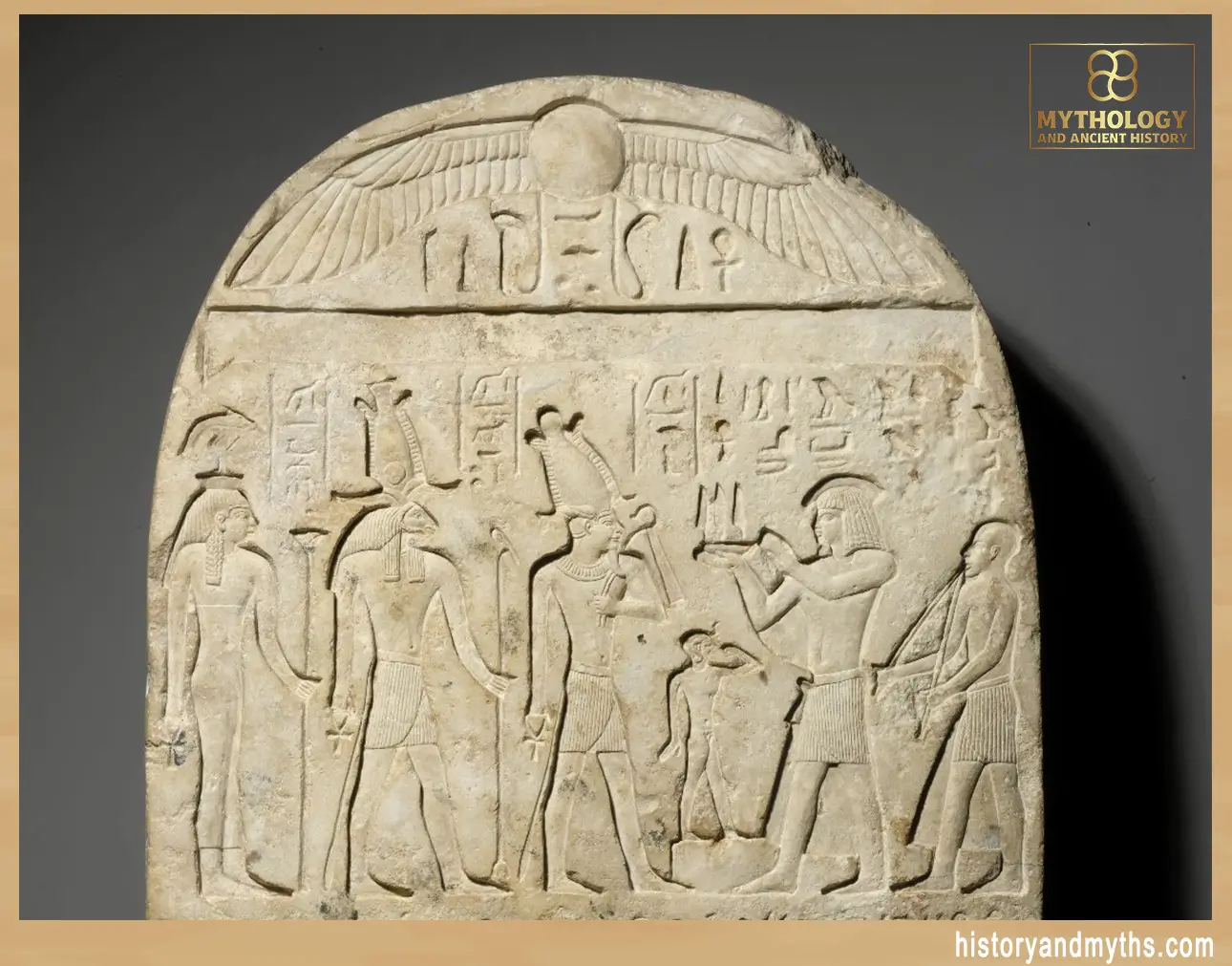
Although Hatmehit began as a local goddess of fish and water, her identity later intertwined with the religious landscape of Mendes, one of the Delta’s most distinctive cult centers. Mendes was home to a powerful triad composed of:
- Banebdjedet — the ram-god of Mendes, considered a manifestation of the soul of Osiris,
- Hatmehit — the local goddess of abundance and water,
- Horus the Child or sometimes Harpocrates, depending on the period.
This triad reveals how Egyptian religious thought often blended local and national traditions. Hatmehit, with her deeply regional background, became connected to a god who held wider theological significance. Through this association, she acquired a more formal role as the consort of Banebdjedet, fitting into the pattern seen in many Egyptian cities where a nurturing goddess balanced a male deity tied to power or kingship.
Despite this association, Hatmehit’s character never shifted dramatically. She remained the gentle presence of the river, the provider of life and fertility. Her union with Banebdjedet simply placed her within a familiar Egyptian religious framework: a divine pair representing strength supported by nourishment and renewal.
The Mendes triad also suggests that her worship was more organized in this region than elsewhere. Even without grand myths, Hatmehit played a recognizable part in the sacred geography of the Delta, giving the community a goddess who symbolized the everyday gifts of their environment.
Iconography and Symbolism: How Hatmehit Appears in Egyptian Art
Hatmehit’s visual identity is one of the clearest clues we have about her character. Though she does not appear often in surviving monuments, the symbols linked to her are remarkably consistent and reveal how the people of the Delta understood her role.
1. The Fish Emblem
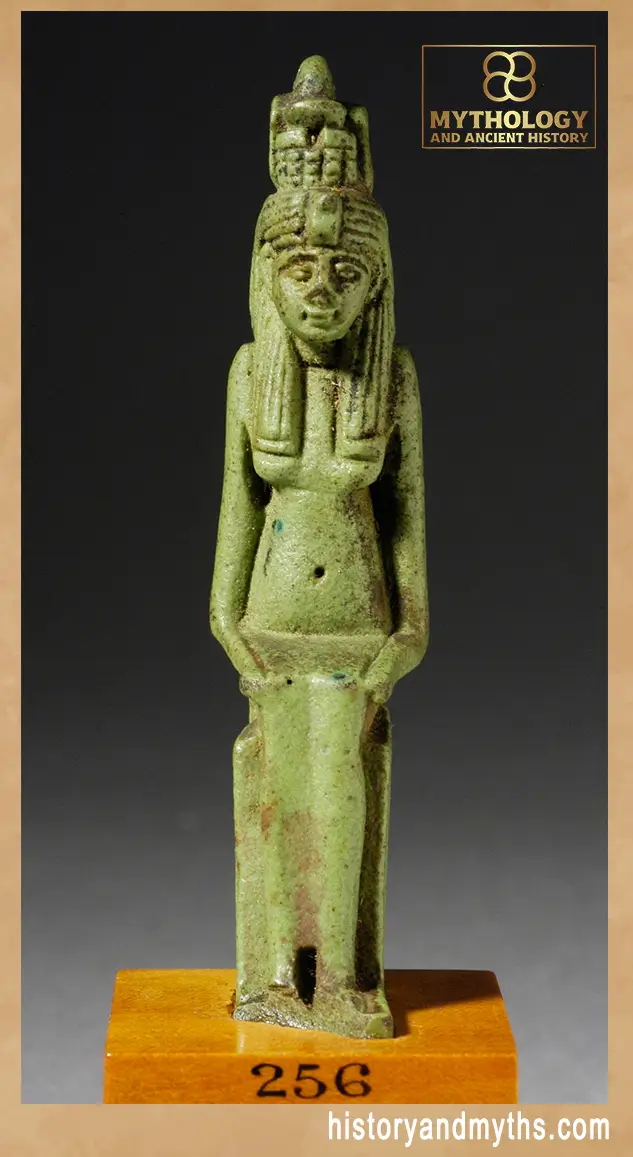
Hatmehit is most famously associated with the fish symbol, which appears above her head in some depictions or amulets.
For the people who lived in a landscape shaped by rivers, marshes, and fisheries, the fish represented:
nourishment
abundance
the steady, dependable gifts of the Nile
The emblem made her instantly recognizable as a goddess of local prosperity and aquatic fertility.
2. A Woman with Local Attributes
Like many regional deities, Hatmehit is portrayed as a human woman, without an animal head or hybrid form. This simplicity reflects her nature as a goddess tied to daily life rather than cosmic power. Her femininity emphasizes ideas of nurture, continuity, and the quiet rhythms of the river.
3. Water-Themed Motifs
Even when no fish emblem is present, Hatmehit is often associated with water motifs rippling patterns, net imagery, or decorative elements that echo the movement of the Nile. These subtle visual cues anchor her identity in the world of fishing, marshland fertility, and the seasonal rise of the river.
4. Rare but Meaningful Appearances
Although she does not appear frequently in major temples or royal monuments, every depiction of Hatmehit carries symbolic weight. Whether shown alongside other Mendes deities or on local objects, her imagery always points back to the same themes: sustenance, renewal, and the life-giving presence of water.
Hatmehit’s iconography may be modest, but it is precise crafted to represent a goddess whose power lay not in mythic battles but in the everyday blessings the Nile brought to her community.
Hatmehit — Foremost of the Fish
Hatmehit is a rare and regionally rooted goddess whose identity reflects the daily life of the Nile Delta.
Known for her fish emblem and her deep connection to water, she represents nourishment, fertility, and the quiet abundance of the river.
Her worship centered in Mendes, where she formed part of a local triad and symbolized the dependable blessings that sustained the community.
- Goddess of fish, water, and local abundance.
- Worshipped primarily in Mendes (Djedet) of the Nile Delta.
- Often shown with a fish emblem or water motifs.
- Associated with Banebdjedet in the Mendes Triad.
- Embodies the everyday life-giving power of the Nile.
© historyandmyths.com — Educational use
Legacy: Why a Local Water Goddess Endured in Egyptian Tradition
Hatmehit’s endurance in Egyptian religious memory is surprising when compared to the great goddesses of the Nile Valley. She had no grand temple complexes, no elaborate myths, and no wide national cult. Yet her name survived for centuries because she represented something essential to everyday life in the Delta: the steady, dependable generosity of water.
Her connection to the Mendes region anchored her identity in a physical landscape that shaped the lives of farmers and fishermen. While national theology focused on cosmic order, resurrection, and kingship, Hatmehit embodied a more immediate kind of blessing the kind felt in a good fishing season, a fertile marsh, or the quiet rise of the river that promised food and stability.
Her assimilation into the Mendes triad also helped preserve her place in local tradition. By becoming the consort of Banebdjedet, she gained a formal role in a structure that the community recognized and respected. But even within this triad, her essence remained unchanged: she was still the goddess of water, life, and the everyday world that surrounded her worshippers.
Hatmehit endures because Egyptian religion did not belong only to pharaohs and priests. It also belonged to the people who lived by the river those who understood that survival came not from mythic heroes, but from the quiet, reliable presence of the waters that sustained them. Hatmehit is their goddess, and her legacy reflects the lives of those who kept Egypt alive.
Key Takeaways — Hatmehit
- Hatmehit is a local goddess of fish, water, and nourishment in the Nile Delta.
- Her name, “Foremost of the Fish,” reflects her link to river life and abundance.
- She was especially worshipped in Mendes, where she joined the local Mendes Triad.
- Her iconography focuses on a fish emblem and simple water imagery rather than grand myth.
- She symbolizes the everyday blessings of the Nile that sustained ordinary Egyptians.
© historyandmyths.com — Educational use
Frequently Asked Questions about Hatmehit
1. Who is Hatmehit in Ancient Egyptian mythology?
Hatmehit is a local goddess of water, fish, and abundance worshipped mainly in the Nile Delta, especially in Mendes.
2. What does the name Hatmehit mean?
Her name is often translated as “Foremost of the Fish,” reflecting her strong connection to river life.
3. What was Hatmehit’s role in the Mendes Triad?
She was considered the consort of Banebdjedet, forming a local triad that represented strength, nourishment, and renewal.
4. How is Hatmehit depicted in Egyptian art?
She appears as a human woman with a fish emblem above her head or with water-themed motifs that highlight her domain.
5. Was Hatmehit widely worshipped across Egypt?
No. Her cult was mostly regional, centered in Mendes, where the abundance of fish and water shaped her significance.
6. What did Hatmehit symbolize?
She symbolized nourishment, fertility, and the everyday blessings provided by the Nile’s waters.
Sources & Rights
- Wilkinson, Richard H. The Complete Gods and Goddesses of Ancient Egypt. Thames & Hudson, 2003.
- Pinch, Geraldine. Egyptian Mythology: A Guide to the Gods, Goddesses, and Traditions of Ancient Egypt. Oxford University Press, 2004.
- Teeter, Emily. Religion and Ritual in Ancient Egypt. Cambridge University Press, 2011.
- Hornung, Erik. Conceptions of God in Ancient Egypt: The One and the Many. Cornell University Press, 1996.
- Assmann, Jan. Death and Salvation in Ancient Egypt. Cornell University Press, 2005.
- Dunand, Françoise, and Christiane Zivie-Coche. Gods and Men in Egypt: 3000 BCE to 395 CE. Cornell University Press, 2004.
- Lesko, Leonard H. The Great Goddesses of Egypt. University of Oklahoma Press, 1999.
- Bard, Kathryn A. An Introduction to the Archaeology of Ancient Egypt. 2nd ed. Wiley-Blackwell, 2015.
- Frankfort, Henri. Ancient Egyptian Religion: An Interpretation. Dover Publications, 2000.
- The Brooklyn Museum. Collection Online: Donation Stela of the Mendes Triad.
- Los Angeles County Museum of Art (LACMA). Collection Online: Faience Figure of the Goddess Hatmehit.
- UCLA Encyclopedia of Egyptology. Articles on Egyptian Religion, Local Cults, Mendes, and Regional Deities.
Written by H. Moses — All rights reserved © Mythology and History