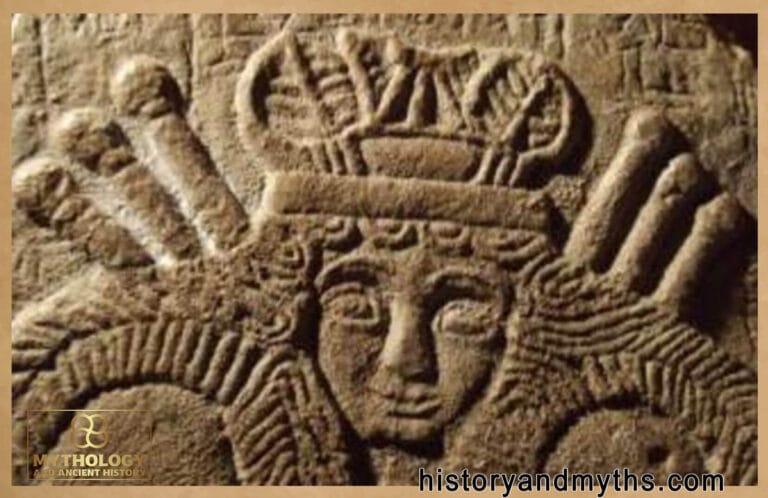
Adad (Hadad/Ishkur): Mesopotamian Storm and Thunder God
Who Was Adad (Hadad/Ishkur), the Mesopotamian Storm God?
Imagine standing on the plains of Mesopotamia as the horizon darkens and the air grows heavy. The first rumble shakes the earth, followed by flashes of lightning that split the sky. For the farmers who waited anxiously for rain, this was no ordinary storm—it was the presence of a god.
To the people of the ancient Near East, that god was Adad, also called Hadad or Ishkur, the lord of thunder and storms. His voice was heard in the rolling thunder, his weapon seen in the lightning that struck the earth. More than a destroyer, he was also a giver: the rains he commanded brought crops to life and filled the rivers with water.
In every storm, Adad revealed his dual nature—both fierce and generous—reminding mortals that the forces of the sky could nurture or devastate, bless or punish, depending on the god’s will.
Origins and Early Role of Adad in Mesopotamian Mythology
Adad was born to Anu, the supreme sky God whose dominion stretched across the vast celestial realm. The identity of his mother remains shrouded in mystery, often left unnamed in the annals of mythology, hinting at a divine figure of considerable power and prestige.
His mastery over these elements was not merely about wielding power, but also about maintaining balance and nurturing life. As he matured, Adad’s dominion over weather became more pronounced.
| Deity | Region | Main Symbols | Key Roles |
|---|---|---|---|
| Adad (Ishkur) | Mesopotamia | Thunderbolt, Bull | Storms, Rain, Fertility, Destruction |
| Hadad / Baal | Levant (Canaan/Syria) | Thunderbolt, Clouds | Storms, Fertility, “Rider on the Clouds” |
| Teshub | Hurrian–Anatolian | Bull, Storm-Chariot | Storm God, Weather Control |
| Zeus | Greece | Lightning Bolt, Eagle | Sky God, King of the Gods, Thunder |
Adad in Mesopotamian Art, Symbols, and Powers
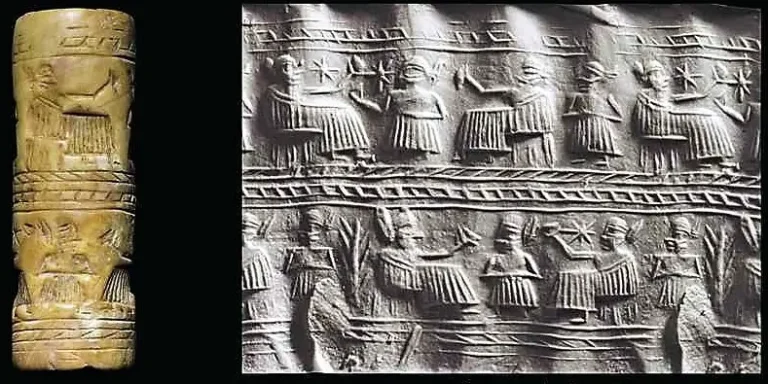
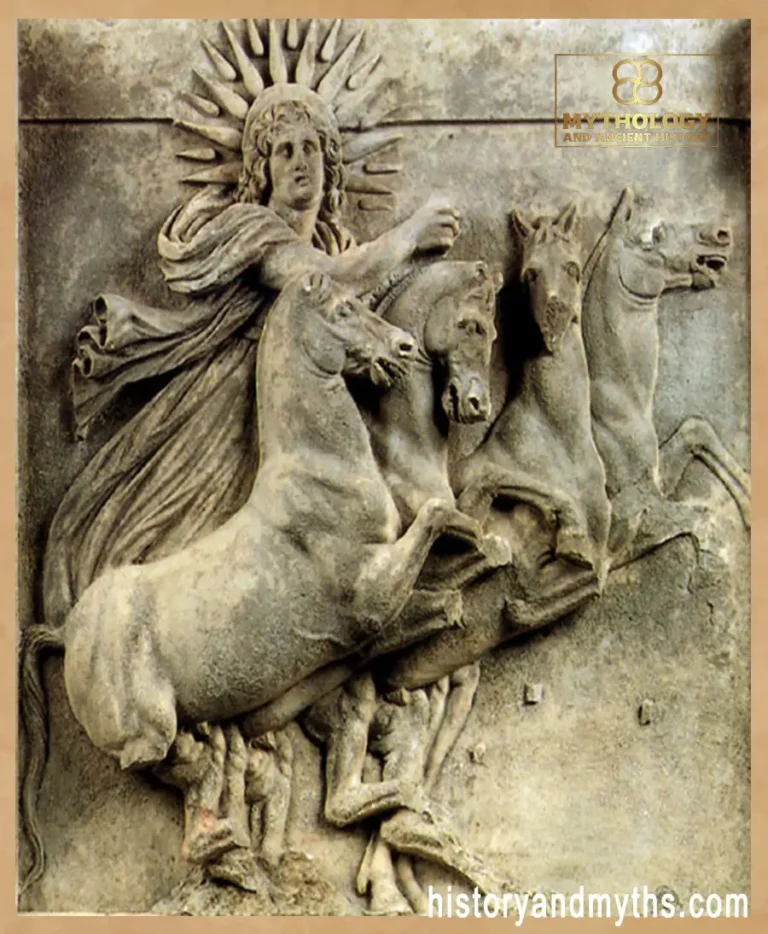
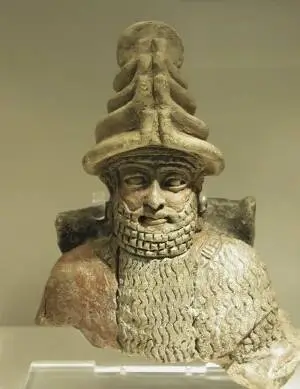
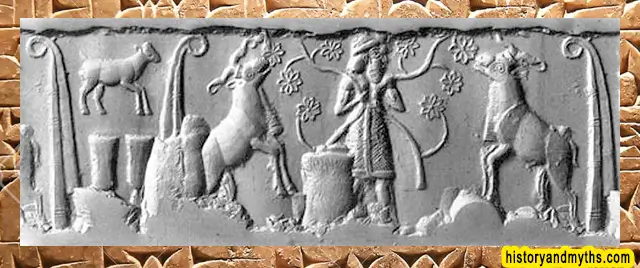
Adad, the Mesopotamian God of storms and rain, was depicted with distinct features in ancient art that highlighted his powerful and dynamic nature. This physicality reflected his active and forceful role in controlling the elements of weather.
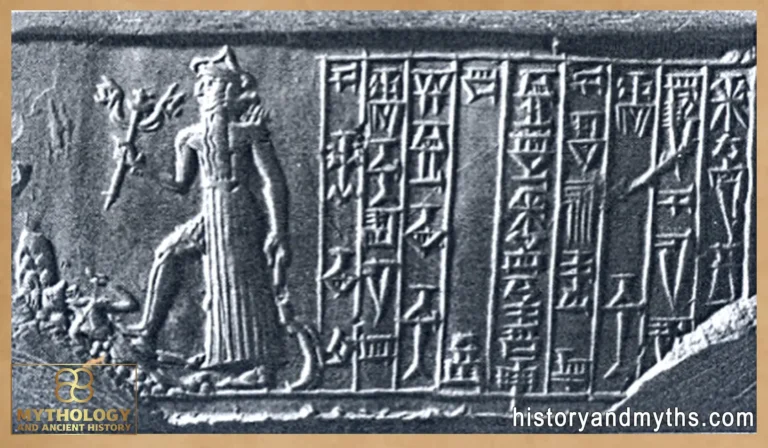
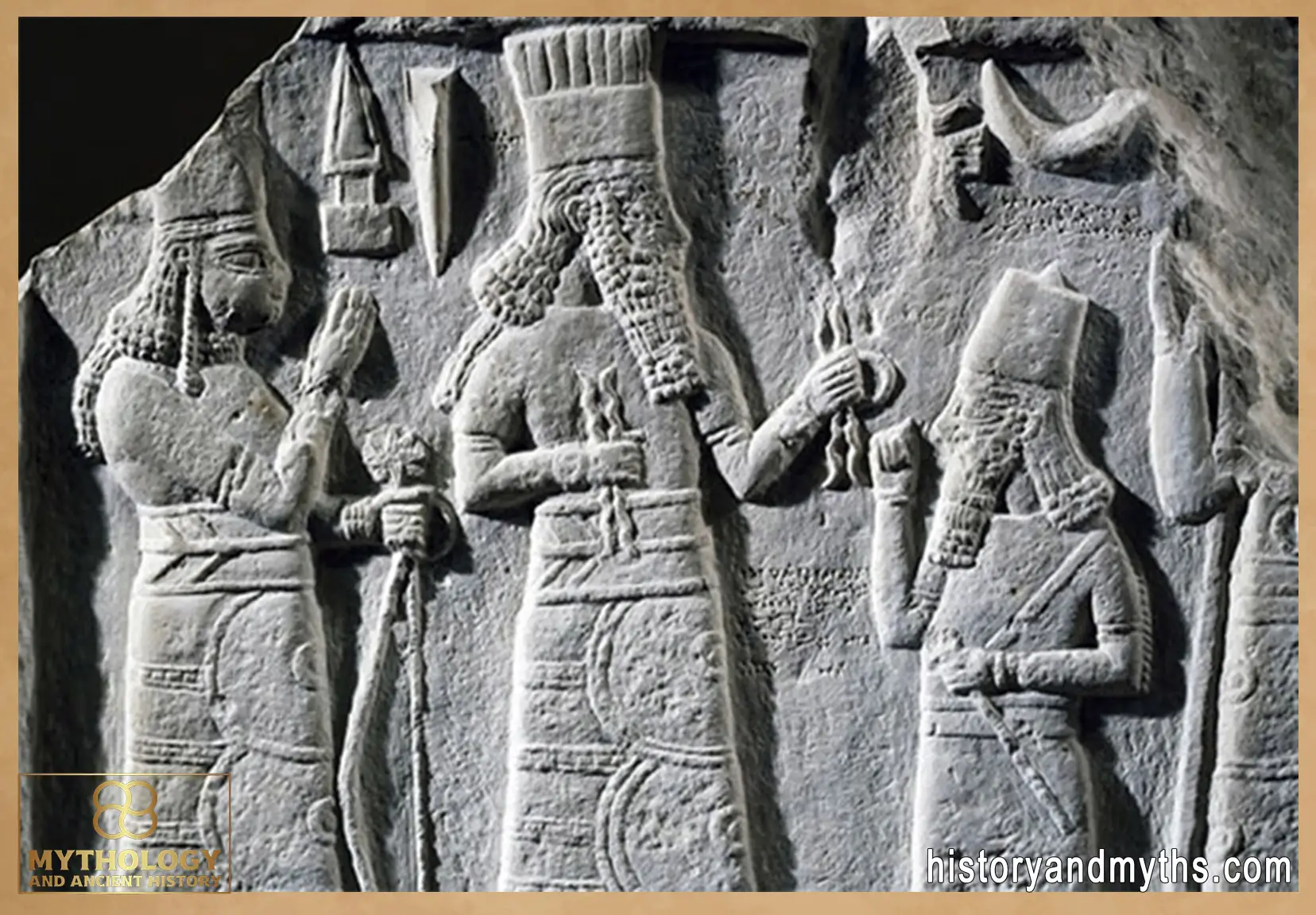
Adad was often shown holding weapons or tools, such as a lightning fork or an axe. Which represented his ability to command the elements of storm and Thunder. These items not only symbolized his power, but also his role as a protector and warrior deity.
Communities depended on his blessings for successful harvests and overall prosperity. Adad also had a role as a guardian.
His mood could shift quickly, mirroring the sudden changes in weather from calm to turbulent. This aspect of his personality made him both feared and revered, as his favor could bring prosperity, but his displeasure could result in devastating storms.
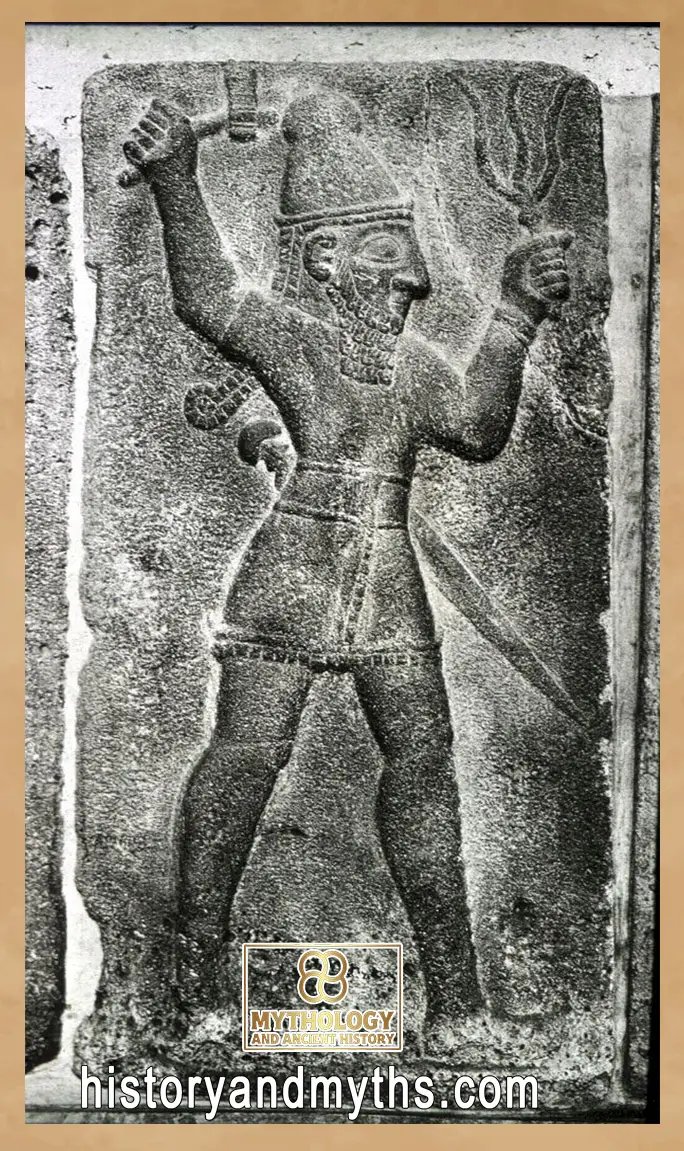
Symbols of Adad: Thunderbolt, Bull, and Storm Imagery
Adad was associated with several symbols that reflected his powers and roles as the God of storms and rain. The Thunderbolt was one of the most significant symbols of Adad, representing his authority over Thunder and lightning.
⚡ Infographic: Adad (Hadad/Ishkur) ⚡
- Identity: Mesopotamian storm and thunder god, also called Hadad (West Semitic) and Ishkur (Sumerian).
- Symbols: Thunderbolt, bull, storm clouds — embodying strength and fertility.
- Dual Nature: Bringer of rain and fertility, yet also destructive through floods and storms.
- Consort: Shala, goddess of grain and abundance, reinforcing Adad’s link to fertility.
- Key Myths: Atrahasis Flood, Epic of Anzu, Epic of Erra — highlighting his power and unpredictability.
- Worship: Temples in Babylon, Assur, Nineveh; rituals invoking storms for crops and divine justice.
© historyandmyths.com — Educational use
Family of Adad: Parents, Consort Shala, and Children
Adad’s familial connections, particularly regarding his parents, highlights the diverse and powerful influences that shape his role within Mesopotamian mythology. Anu, as the father of Adad, embodies the vastness and sovereignty of the sky, lending Adad an expansive realm of influence that stretches across the heavens.
Whichever narrative you choose to accept, the fact remains that Adad’s diverse parentage contributes distinct qualities to Adad’s divine persona, crafting him as a complex figure whose powers are essential for the maintenance of life and order on Earth.
Who is primarily associated with grain and the fertility of the Earth, but she also has connections to weather phenomena complement. Her role in agriculture as a deity whose domains are crucial for the sustenance and prosperity of society, Shala is revered as a vital figure in the Pantheon.
In addition to his consort, Adad is said to have had multiple offspring, each holding significant roles within Mesopotamian mythology. However, some are only mentioned in passing, with very little information known about them. Šubanuna, Namašmaš and Menunesi.
His name itself signifies justice or righteousness. Pointing to his role as a divine embodiment of fairness and legal integrity, Misharu’s presence in Mesopotamian mythology underscores the cultural importance of law and order, reflecting the societal emphasis on maintaining balance and ethical conduct.
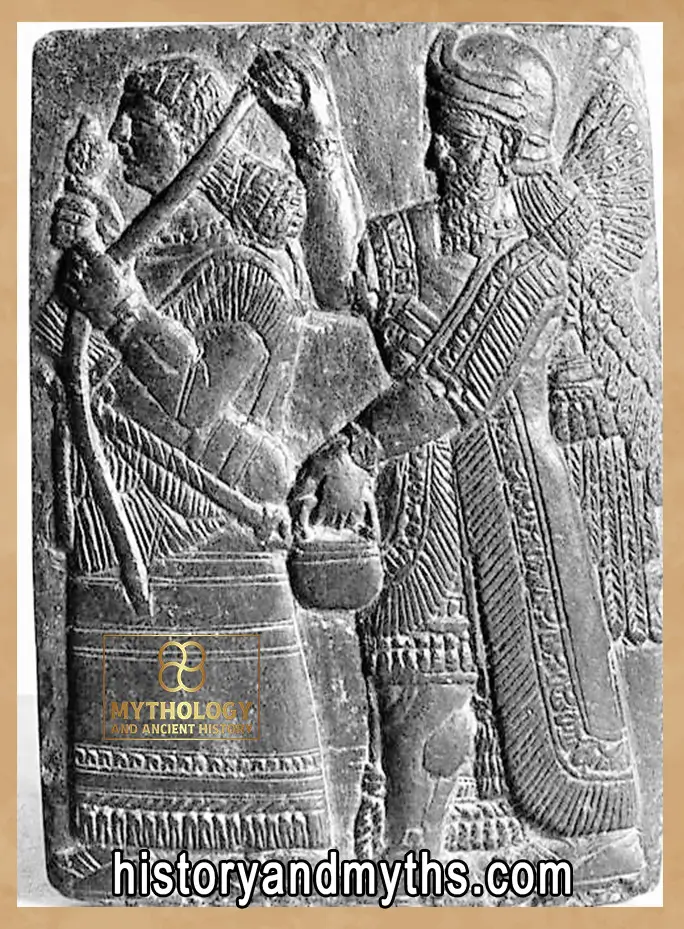
Adad’s Role in the Atrahasis Epic and Flood Myth
In one of the most pivotal roles Adad played in Mesopotamian mythology, he appeared in the Atrahasis Epic, an ancient narrative that explores the origins of and solutions to human suffering.
Here, Adad was tasked with the execution of this grim decree, harnessing his most fearsome powers alongside Enlil. Adad’s role was crucial in chilling. He gathered dark clouds over the horizon, each one swollen with the promise of rain.
Adad in the Epic of Anzu: Storms Against Chaos
In the tumultuous saga of the Epic of Anzu, Adad stands as a guardian of divine order against chaos. The monstrous Anzu, a creature that was a blend of a bird and lion, had stolen the tablet of destinies from Enlil, usurping control over the fates from the gods themselves.
His ability to wield the weather as a weapon made him uniquely suited to confront Anzu when the time came to face Anzu. Adad unleashed his full might.
Adad’s Role in the Epic of Erra: Destruction and Renewal
In a narrative that explores themes of destruction and renewal, the Epic of Erra highlights Adad’s alliance with Erra, or Nergal, the god of plague and war.
Together, they swept across the land, toppling civilizations, erasing the old, and making space for new growth. Their actions were harsh but seen as necessary within the context of divine will, purging the world of stagnation and decay.
Worship of Adad in Mesopotamia: Temples, Rituals, and Devotion
Adad’s critical role in agriculture and his control over the potentially destructive forces of nature made him an essential deity in the Mesopotamian pantheon, revered across the ancient Near East.
Conclusion: The Legacy of Adad in Near Eastern Mythology
Adad, the storm God of Mesopotamia, embodies the duality of nature, both its life-giving generosity and its unforgiving fury. His legacy and mythology highlight the dependence of ancient civilizations on the natural elements and the divine figures believed to control them.
Key Takeaways
- Adad (also called Hadad/Ishkur) is the Mesopotamian storm and thunder god tied to life-giving rain and destructive tempests.
- His core symbols are the thunderbolt and the bull; he is often paired with the grain goddess Shala.
- He shows a dual nature: bringer of fertility and harvests, yet also a source of floods and devastation.
- In major narratives, he plays a role in the Flood (Atrahasis) and appears in contexts like the Anzu and Erra epics.
- Cross-culturally he parallels West-Semitic Hadad/Baal and, functionally, weather gods like Teshub and Zeus.
- Worship centered across Mesopotamian cities, with rites seeking timely rains and divine justice through the storm.
Frequently Asked Questions about Adad (Hadad/Ishkur)
1) Who was Adad in Mesopotamian religion?
Adad—also known as Hadad (West Semitic) and Ishkur (Sumerian)—was the storm and thunder god whose rains sustained agriculture and whose tempests could destroy.
2) What symbols represent Adad?
The thunderbolt and the bull are his prime emblems; storm clouds and the lightning fork often accompany him in art.
3) Who was Adad’s consort?
Shala, a grain and fertility goddess, is commonly paired with Adad, underscoring his connection to crops and seasonal abundance.
4) Is Adad the same as Hadad/Baal?
In West-Semitic traditions, Hadad/Baal closely parallels Adad; many attributes and functions overlap across regions.
5) What is Adad’s role in the Mesopotamian Flood story?
In the Atrahasis tradition, Adad unleashes the deluge as part of a divine decree, showing the destructive side of his storms.
6) Where and why was Adad worshipped?
Across Mesopotamian cities, devotees sought his favor for timely rains, fertility, and sometimes justice wielded through the storm.
Sources
- Black, Jeremy, and Anthony Green. Gods, Demons and Symbols of Ancient Mesopotamia: An Illustrated Dictionary. London: British Museum Press, 1992.
- Dalley, Stephanie. Myths from Mesopotamia: Creation, the Flood, Gilgamesh, and Others. Revised edition. Oxford: Oxford University Press, 2000.
- Lambert, W. G. Babylonian Creation Myths. Winona Lake: Eisenbrauns, 2013.
- Bottéro, Jean. Religion in Ancient Mesopotamia. Translated by Teresa Lavender Fagan. Chicago: University of Chicago Press, 2004.
- Hallo, William W., and J. J. A. van Dijk. The Exaltation of Inanna. Yale Near Eastern Researches, 1968. (for comparative storm-god context)
- Frayne, Douglas R. Old Babylonian Period (2003–1595 BC). RIME 4. University of Toronto Press, 1990. (inscriptions mentioning Adad)
- Kaufmann, Yehezkel. The Religion of Israel: From Its Beginnings to the Babylonian Exile. Translated by Moshe Greenberg. University of Chicago Press, 1960. (background on Hadad/Baal and West-Semitic parallels)
Written by H. Moses — All rights reserved © Mythology and History