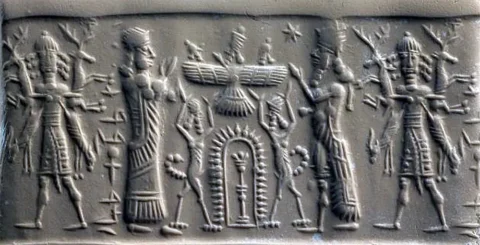
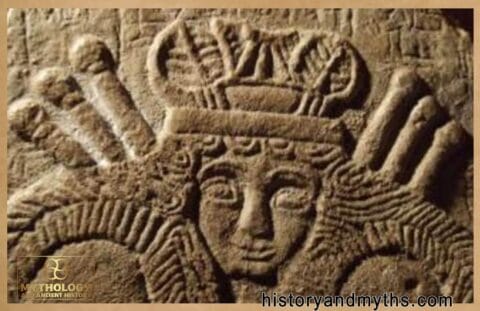
Who is Ninurta? Mesopotamian God of Battles, Farming, and Justice
Introduction
Origins of Ninurta in Mesopotamian Mythology
Once Upon a time, in a land cradled by the life-giving rivers of Tigris and Euphrates, Ninurta, the future hero God, was born. His father was Enlil, the God of air and the leader of the gods whose word was the law that ordered the world.
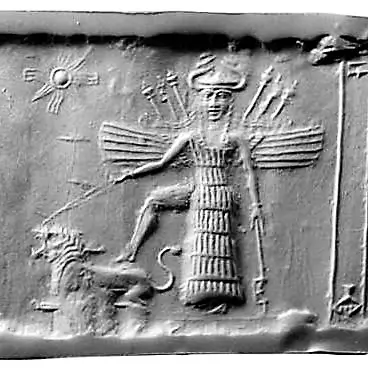
Under the tutelage of his father, he learned the art of war, mastering the weapons that would become his symbols. The bow for the precision to strike at the heart of darkness, the mace for the strength to crush the bones of chaos, and the net to ensnare his enemies, both large and small.
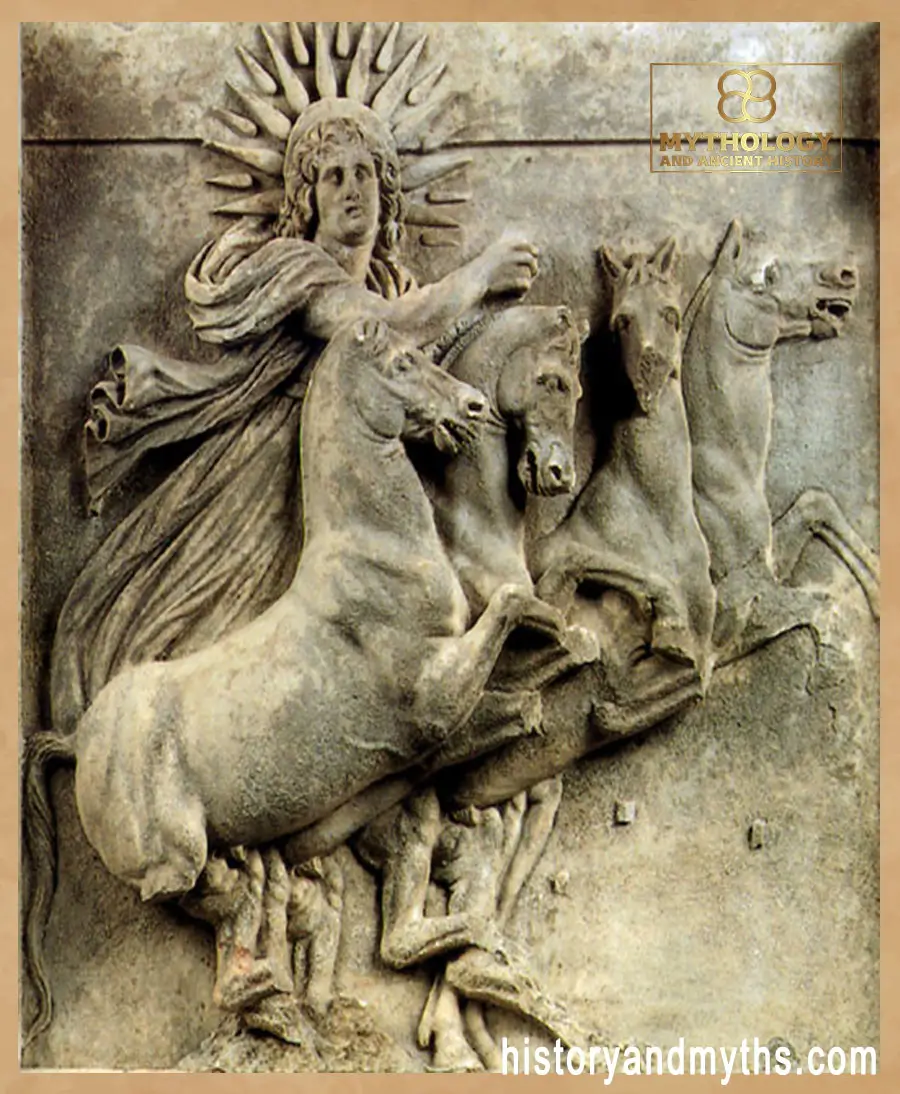
| Myth / Episode | Opponent / Focus | Weapon / Agency | Core Theme | Outcome | |
|---|---|---|---|---|---|
| Battle with Anzu | Anzu steals the Tablet of Destinies | Divine counsel; heroic might | Restoring cosmic order | Ninurta defeats Anzu | |
| Exploits against Asag (Lugal-e) | Asag (stone demon) and army of stones | Sharur (enchanted mace) | Chaos vs. order; irrigation | Asag slain; rivers ordered | |
| The Slain Heroes | Rebellious figures after upheaval | Judgment & re-ordering | Reimposing justice | Order restored | |
| Enki’s Turtle | Enki traps Ninurta with a turtle | Cunning and trickery | Limits of brute force | Ninurta ensnared | |
| Worship & Cult | Nippur, Lagash (as Ningirsu) | Temples, offerings | City-god protection | Enduring cult across Sumer |
Ninurta’s Appearance, Symbols, and Divine Roles
Ninurta, a deity of multifaceted roles and attributes, was integral to the fabric of Mesopotamian society. Not only was he a guardian, but he was also the God of war, hunting, agriculture and healing.
Sharur was no ordinary mace. It was one of divinity and magic, for it could speak, offering wisdom and guidance to Ninurta, making them an unbeatable team on and off the battlefield.
Ninurta’s exploits on the battlefield were legendary, serving as a protective force against chaos and disorder. The tales of his confrontations with demons and evil forces served as allegories for the struggles of good versus evil, reinforcing the moral and ethical codes of the time.
Ninurta’s influence was paramount in agriculture, a cornerstone of Mesopotamian civilization. He was credited with introducing the plow and other agricultural innovations.
Though less commonly recognized for this role, Ninurta also encompassed aspects of healing within his divine portfolio. This role was intricately linked with his consort Gula, the goddess of healing, suggesting a dual aspect of destruction and regeneration.
The Family of Ninurta: Parents, Consorts, and Lineage
Ninurta’s life was filled with relationships between both the mortal and the divine. He fostered strong bonds with his loyal subjects, as well as bonds of brotherhood amongst his fellow gods. At the center of his relationships was his wife, Gula. the goddess of healing.
This made her an essential figure in daily Mesopotamian life, where health and well-being were deeply intertwined with divine favor. In the narratives that have survived, their union was depicted not just as a marital bond.
Through the union of Gula and Ninurta came two divine children, a son and a daughter. First came Damu, the God of medicine. Damu, their son, inherited the profound healing abilities and medical knowledge of his mother, Gula.
His relationship with Enlil, his father, was particularly significant. As Enlil was a chief deity who commanded the elements and ordained the fates of gods and mortals alike, Ninurta often acted as Enlil’s champion, executing his will and maintaining order.
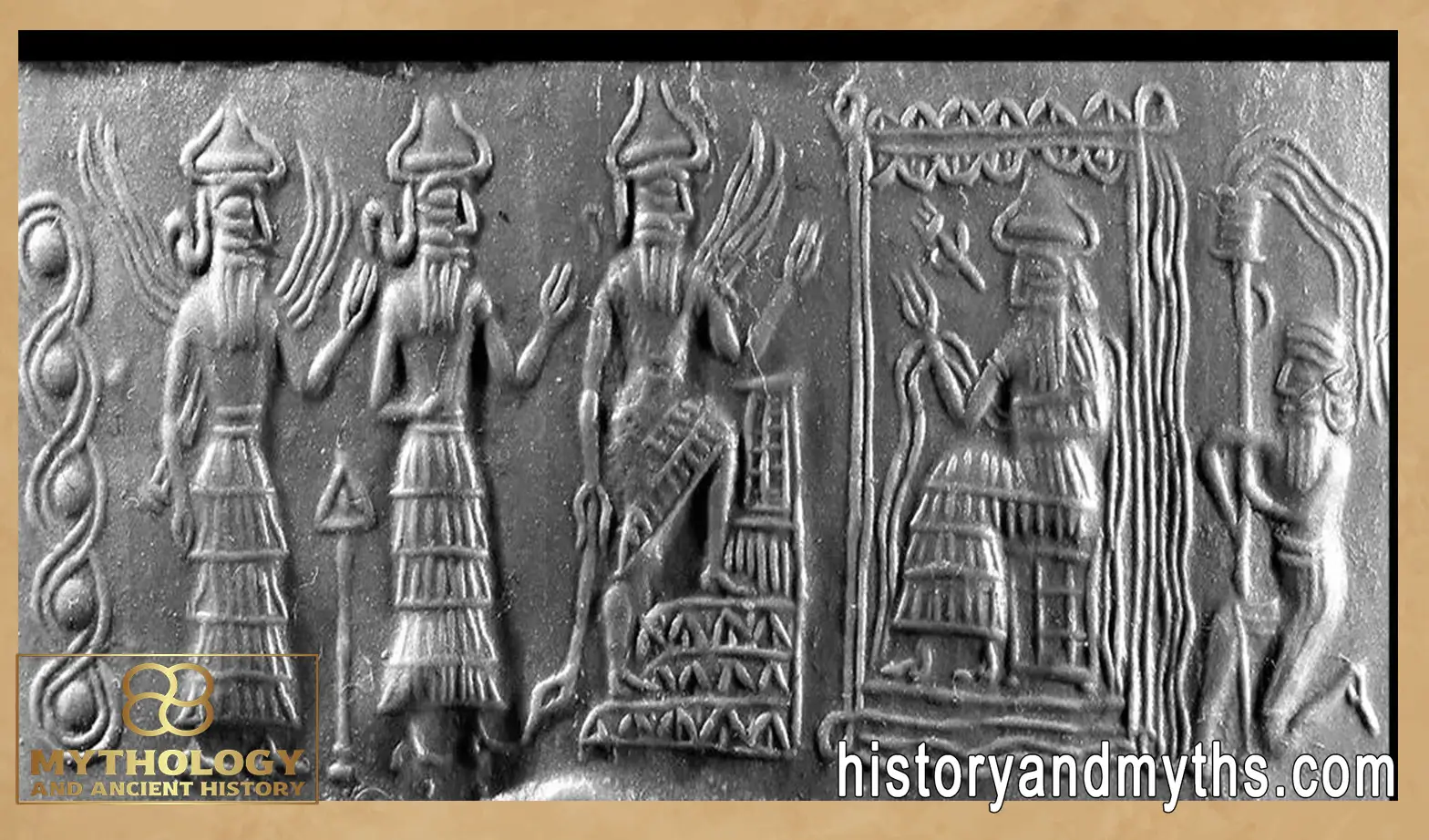
The Myth of Anzu and Ninurta: Battle for the Tablet of Destinies
The Anzu then struck Ninurta, pushing him back a great distance. Ninurta was shocked, but he wasn’t finished yet. At his command, the southern wind sliced the Anzu’s wings clean off, sending the creature crashing into the earth below. With a clean strike from his sword, Ninurta slit the Anzu’s throat and retrieved the tablet of destiny, and by doing so, restored balance to the universe. This victory was more than a personal triumph. It was a message to all of creation.
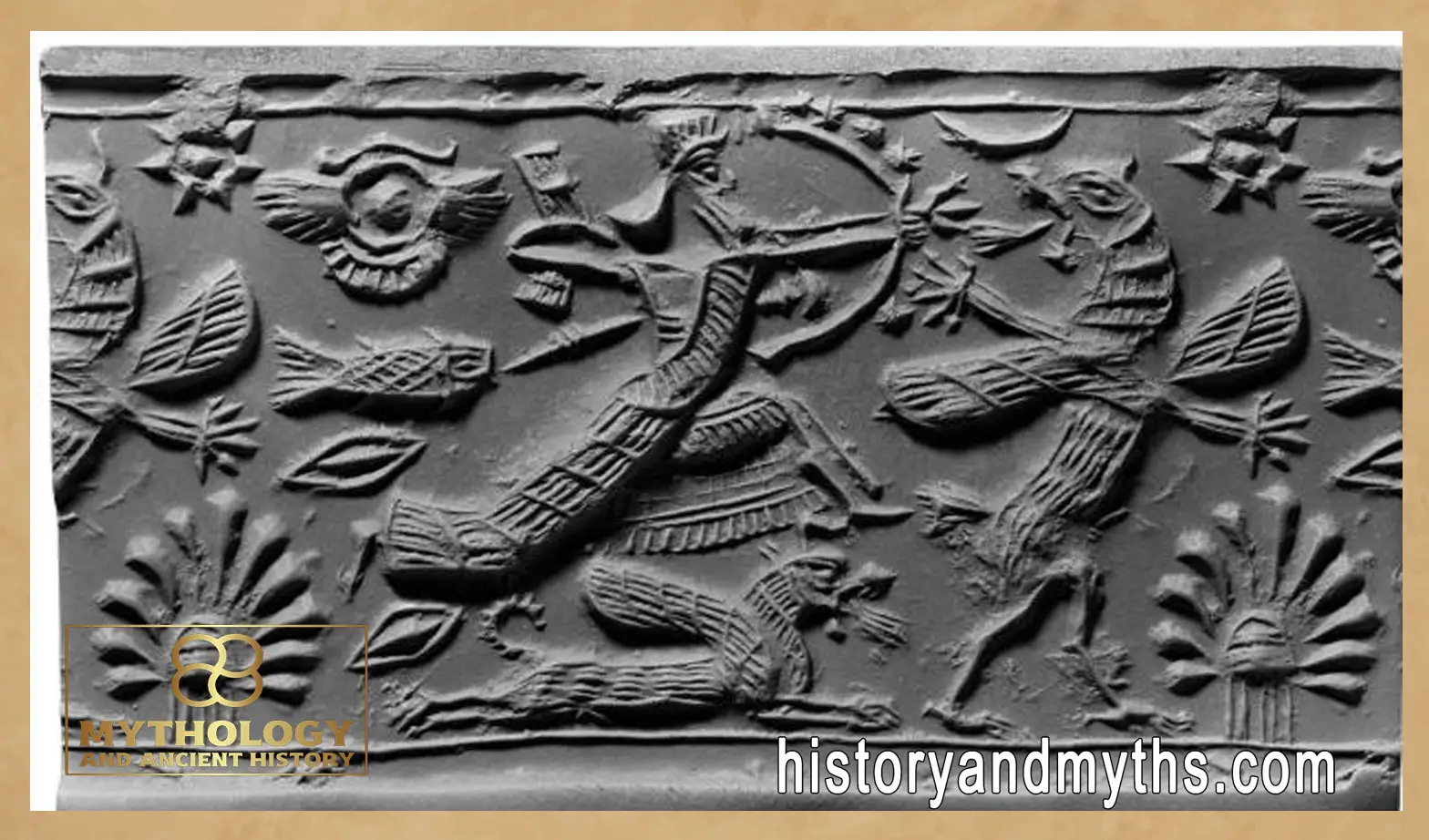
Ninurta vs Asag: The Warrior God Against the Stone Demon
was Asag, a monstrous demon with the power to spread sickness and disease throughout the world. The presence of Asag alone was said to boil the rivers around him.
Asag was described as a large, round creature with three legs and three arms, no neck and many eyes all over its body. It possessed a dark and hardened skin, which was said to be nearly indestructible.
Asag was also accompanied by his army of rock demons. Under Asag’s command, they laid waste to cities and towns, spreading death, destruction, disease.
The cry for salvation was loud and ascended up to the heavens. sharur, Ninurta’s magical mace. Caught wind of Asag’s actions and brought this to his attention.
Ninurta could not stand idly by as this demon continued its destruction of the earth and called for a divine assembly. Within this gathering of the gods, Ninurta and sharur explains the situation below. As the leader, Enlil tasks Ninurta with the monumental duty of confronting Asag and ending the demon’s life.
The Council of Gods, recognizing the gravity of the threat, supported Ninurta’s quest. Arming him with potent weapons, spells and blessings.
But the most important weapon in Ninurta’s arsenal was Sharur, for its magic and wisdom guided Ninurta throughout his journey below. Ninurta, with Sharur at his side, descended to the earth, ready to confront Asag and his stone army.
The battle was like no other, a spectacle that defied imagination. Asag, with his legion of stone monsters, unleashed havoc. Their forms as impenetrable as the mountains they were born from.
But Ninurta, undaunted, met them with a fury that lit the skies, his mace cutting through the air, a streak of divine light amidst the darkness. Ninurta, in his divine armor, moved like a storm, unstoppable, his every strike imbued with the power of the elements.
Against him, Asag roared, a sound that shook the very foundations of the earth as he summoned the forces of chaos to his side. The land itself bore the scars of their conflict, torn asunder by their power. With every swing of his Mace, lightning flashed, fires spread, and earthquakes erupted. The once indestructible skin of Asag began to weaken, cracking under the immense strength of Ninurta.
In the end, it was Ninurta who emerged victorious, his final blow, a cataclysm that sealed Asag’s fate. With a roar that silenced the heavens, Ninurta struck down the demon, ending its terror and destruction.
As Asag’s body laid lifeless, Ninurta carried it to the river and used it as a dam for the raging waters, turning the instruments of chaos into sources of life.
Ninurta and the Slain Heroes: Order Restored After Chaos
In a lesser-known tale, Ninurta found himself engaging in combat with various spirits. Much of the tablet remains lost, but here’s what we do know.
Ninurta and Enki’s Turtle: Trickery and Divine Justice
The tale of Ninurta and the Turtle unfolds after Ninurta’s notable triumphs. Over formidable adversaries such as the Anzu bird, the malevolent Asag, and the various slain warriors, victories that had earned him the adulation of gods and mortals alike.
Ninurta’s thoughts wandered far beyond his accomplishments, dreaming of conquests that would span the entirety of the world, his ambition clouding his judgment.
The hero, taken aback by this unexpected foe, found himself ensnared in a struggle unlike any he had faced. The turtle, with strength otherworldly, dug fiercely into the earth, creating a vast pit that soon became a prison for both combatants.
Infographic: Ninurta — Warrior, Healer, and Protector
- Identity: Mesopotamian god of war, agriculture, healing, and law enforcement.
- Symbols: Sharur (enchanted mace), lion-headed eagle (Anzu), plow and irrigation canals.
- Main Myths: Battle with Anzu (Tablet of Destinies), combat with Asag (Lugal-e), Enki’s Turtle trick.
- Roles: Defender of order, organizer of rivers/fields, protector of cities, divine judge.
- Worship Centers: Eshumesha temple at Nippur; Girsu (as Ningirsu); cult festivals and prayers.
- Legacy: Embodied the balance of destruction and renewal, a model of cosmic justice in Mesopotamia.
© historyandmyths.com — Educational use
Worship of Ninurta: Temples, Rituals, and Festivals in Mesopotamia
The cult of Ninurta was a spectacle of faith and devotion, marked by ceremonies that engaged the community in shared acts of worship.
Festivals in honor of Ninurta were times of joy and solemnity, occasions for the community to come together and celebrate the god’s blessings.
Key Takeaways
- Ninurta was a Mesopotamian god of war, agriculture, healing, and order.
- His main weapon, the enchanted mace Sharur, symbolized divine power and justice.
- Major myths include the battle with Anzu, the fight against Asag, the Slain Heroes, and Enki’s Turtle.
- Ninurta balanced destruction with renewal—defending cities, ordering rivers, and healing the land.
- His worship centered at Nippur’s Eshumesha temple and Girsu (as Ningirsu).
- Ninurta’s legacy embodies cosmic justice, making him both a warrior and protector.
Conclusion: Ninurta’s Legacy as Warrior, Healer, and Protector
Ninurta’s legacy is a multifaceted narrative woven from threads of myth, history, and worship. His stories, transcending mere tales of conquest, reflect the profound human quest for balance, wisdom, and the courage to face the unknown.
Frequently Asked Questions about Ninurta
1) Who was Ninurta in Mesopotamian mythology?
Ninurta was the god of war, agriculture, healing, and order, often invoked as a warrior and protector of cities.
2) What was Ninurta’s main weapon?
His enchanted mace Sharur, which could fly and speak, symbolized divine justice and martial power.
3) What is the myth of Anzu and Ninurta?
The demon-bird Anzu stole the Tablet of Destinies, but Ninurta defeated him to restore cosmic order.
4) What is Ninurta’s role in agriculture?
After slaying Asag, Ninurta organized rivers and irrigation, linking him to fertility and farming.
5) Where was Ninurta primarily worshipped?
At the Eshumesha temple in Nippur and in Girsu, where he was known as Ningirsu.
6) What does Ninurta symbolize in Mesopotamian belief?
He represents the balance of destruction and renewal, embodying justice, protection, and healing.
Sources
- Black, Jeremy, and Anthony Green. Gods, Demons and Symbols of Ancient Mesopotamia: An Illustrated Dictionary. London: British Museum Press, 1992.
- Dalley, Stephanie. Myths from Mesopotamia: Creation, the Flood, Gilgamesh, and Others. Oxford: Oxford University Press, 2008.
- Leick, Gwendolyn. A Dictionary of Ancient Near Eastern Mythology. London: Routledge, 1991.
- Bottéro, Jean. Religion in Ancient Mesopotamia. Translated by Teresa Lavender Fagan. Chicago: University of Chicago Press, 2001.
- Lambert, Wilfred G. Babylonian Creation Myths. Winona Lake, IN: Eisenbrauns, 2013.
- Jacobsen, Thorkild. The Treasures of Darkness: A History of Mesopotamian Religion. New Haven: Yale University Press, 1976.
- Oppenheim, A. Leo. Ancient Mesopotamia: Portrait of a Dead Civilization. Chicago: University of Chicago Press, 1977.
- Klein, Jacob. “The Myth of Anzu.” In Journal of Cuneiform Studies, vol. 33, 1981.
Written by H. Moses — All rights reserved © Mythology and History