Greek Sculpture: How Statues, Contrapposto, and Style Worked
Greek sculpture is not simply about creating realistic statues. It is a structured approach to shaping the human body according to specific rules of proportion, balance, and visual control. What appears natural is carefully constructed. The goal was not to copy the body as it is, but to present it as it should be—stable, balanced, and complete.
This is why Greek statues often feel more “perfect” than real people. Muscles are defined but not exaggerated. Movement is suggested but controlled. Even still figures seem alive, not because they move, but because their weight and posture are distributed in a way the eye reads as natural. This effect comes from a system, not intuition.
Understanding Greek sculpture means looking beyond individual statues. It requires understanding how sculptors used proportion, anatomy, and subtle shifts in balance to create the illusion of life. Once you see that system, the statues stop being decorative objects and start reading as precise constructions designed to guide perception.
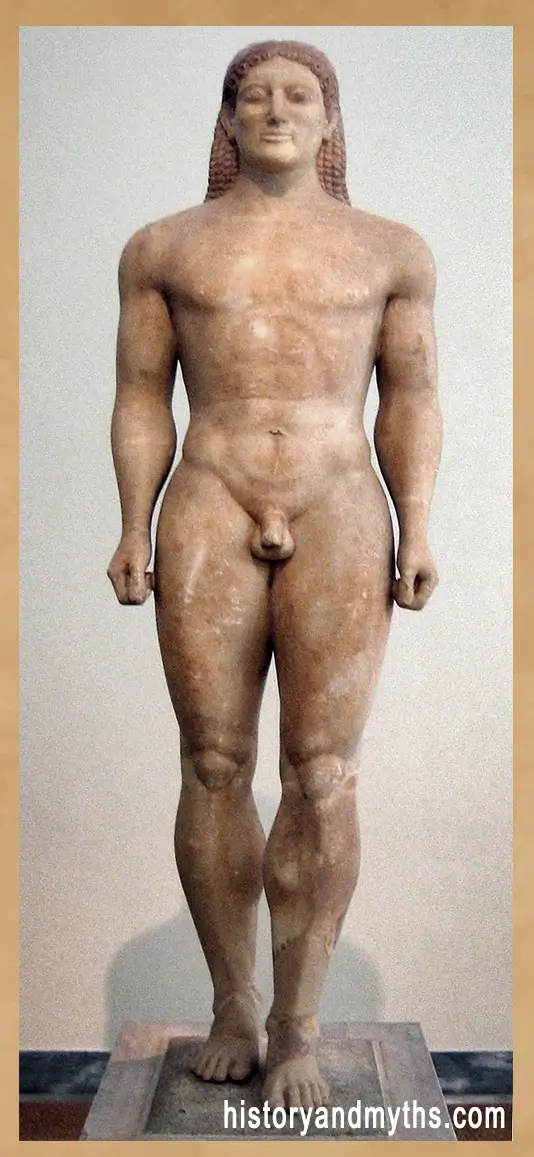
What Is Greek Sculpture?
Greek sculpture is a method of constructing the human form through controlled proportion, anatomical structure, and balanced posture. It is not defined by subject matter or material, but by how the body is organized visually and physically within a set of consistent rules.
At its core, Greek sculpture operates on three linked principles. First, the body is built using proportion, where each part relates to the whole through measurable ratios. Second, anatomical details are simplified and selected rather than copied, so the form remains clear and stable. Third, posture is adjusted to distribute weight in a way that appears natural, even when the figure is completely still.
This approach separates Greek sculpture from simple representation. The sculptor does not reproduce a specific individual or moment. Instead, the body is reconstructed to remove imbalance, excess tension, and irregularity. What remains is a controlled version of the human form that appears complete and internally consistent.
The result is a sculpture that does not depend on movement or expression to feel alive. Its sense of life comes from structure—how proportion, anatomy, and balance are resolved into a single unified form.
| Element | Role in the System | Effect on Perception |
|---|---|---|
| Proportion | Defines relationships between body parts | Creates visual harmony and stability |
| Anatomy | Simplifies and organizes muscle structure | Enhances clarity without overwhelming detail |
| Balance | Distributes weight across the figure | Makes the body appear natural and grounded |
| Contrapposto | Shifts weight to one side | Creates the illusion of movement |
| Surface Treatment | Controls how details are carved | Guides the viewer’s eye across the form |
Why Greeks Created the Ideal Human Form
Greek sculpture did not aim to reproduce ordinary bodies. The focus was on constructing an ideal form that reflects order, balance, and control. This choice was not purely aesthetic—it was tied to how the Greeks understood the human body in relation to thought, identity, and social values.
The body was treated as something that could be improved through structure. Irregularities were removed, proportions were adjusted, and tension was reduced. The result is not a real individual, but a refined version of the human form that appears stable from every angle. This explains why many statues lack strong facial expression. The emphasis is placed on the body itself as a complete system.
This approach also reflects a broader cultural idea: the body should express harmony rather than excess. A figure that is too tense, too detailed, or too dynamic breaks that balance. Greek sculptors avoided this by controlling posture and simplifying anatomy, ensuring that no part dominates the whole.
The ideal body, then, is not about perfection in a modern sense. It is about consistency. Every part must relate logically to the rest, and the figure must hold together visually without contradiction. What the viewer sees is not a person, but a system where form, proportion, and balance are resolved into a stable whole.
The System Behind Greek Sculpture
Greek sculpture is built through a controlled method where proportion, anatomy, and balance are resolved into a single coherent structure. The sculptor does not start from surface detail, but from an underlying framework that determines how the body will stand, carry weight, and relate as a whole.
Proportion is the starting point. The body is divided into measurable relationships that guide the placement of every part. These ratios are not exact copies of real bodies, but adjusted standards that create visual stability. Once the proportions are fixed, the rest of the form follows them consistently, preventing distortion or imbalance.
Anatomy is then simplified and organized. Muscles are not reproduced with full complexity, but selected and arranged to clarify structure. This is why Greek statues appear clear even at a distance. Details support the form instead of competing with it, and nothing is added unless it reinforces the overall balance.
Balance completes the system. The figure is designed so that its weight is distributed in a controlled way, even when one leg carries more load than the other. This distribution is not accidental—it is calculated to create a sense of natural stability without visible strain. The body appears relaxed, but it is carefully constructed to hold that position.
What defines this system is consistency. Each decision—proportion, anatomy, posture—supports the others. If one element is altered without regard to the rest, the figure loses coherence. Greek sculpture works because every part is controlled in relation to the whole, producing a form that feels stable, unified, and complete.
From Rigid to Natural — How Greek Sculpture Evolved
Greek sculpture did not begin with natural movement or balanced posture. Early figures, especially in the Archaic period, were rigid and frontal. The body stood upright, weight was distributed evenly, and movement was absent. These statues were structured, but the system was still incomplete. The form lacked flexibility, and the body read as fixed rather than responsive.
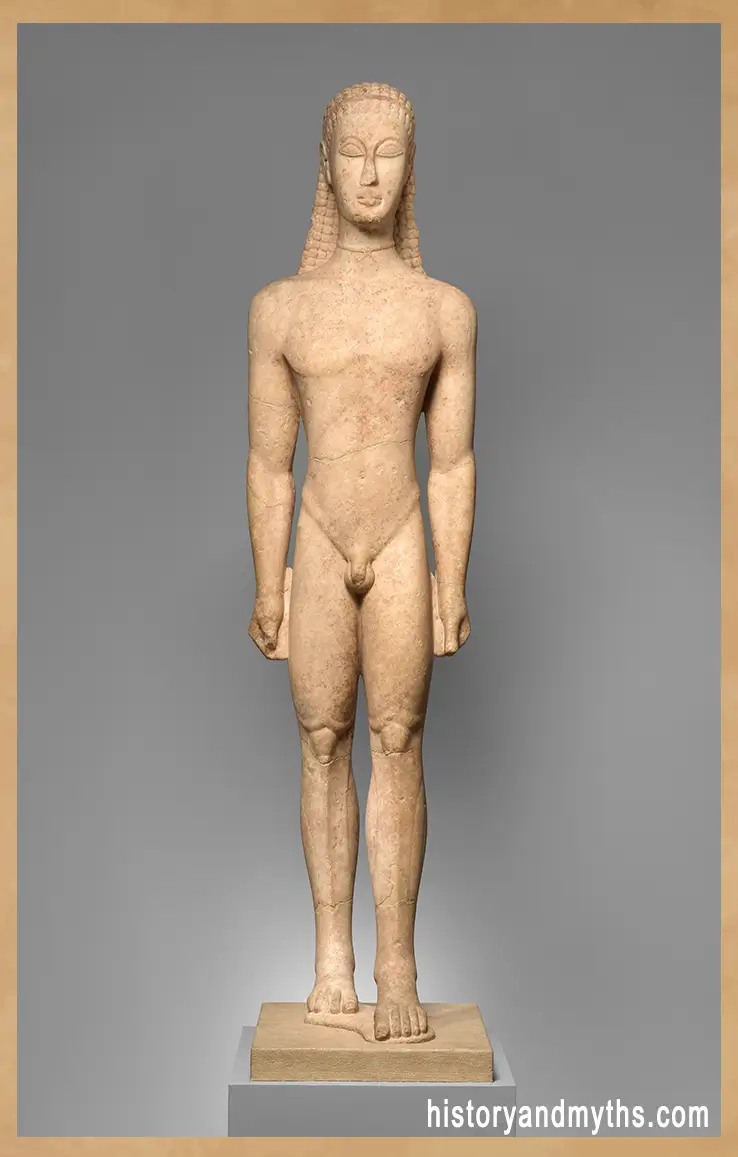
The shift begins when sculptors start to break this symmetry. Instead of dividing weight equally, they begin to move it onto one side of the body. This small change transforms the entire structure. The hips adjust, the shoulders respond, and the body develops an internal relationship between its parts. The figure is no longer static—it becomes organized around balance.
By the Classical period, this system is fully controlled. The body is no longer rigid, but it is not uncontrolled either. Movement is implied through posture, not action. The figure appears at rest, yet capable of motion. This balance between stillness and potential movement defines the stage where Greek sculpture reaches its highest level of clarity.
In the Hellenistic period, the system expands further. Figures become more dynamic, poses more complex, and tension more visible. However, this is not a break from earlier methods. It is an extension. The same principles of proportion and balance remain, but they are applied with less restraint, allowing for greater variation and expression.
This evolution is not a simple progression toward realism. It is a process of refining how the body is constructed. The goal remains consistent: to organize the human form in a way that appears natural, stable, and internally coherent.
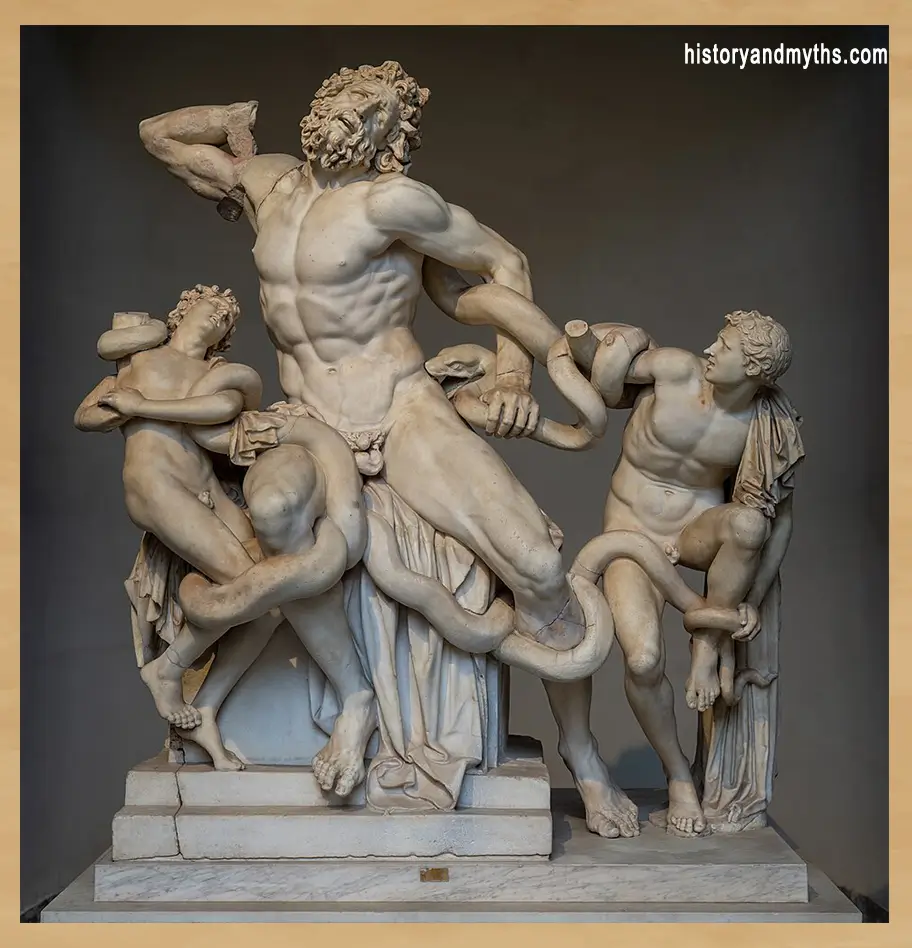
Greek Sculpture — Core Insight
Greek sculpture is not based on copying the human body, but on reconstructing it through a controlled system. Proportion defines structure, anatomy clarifies form, and balance organizes weight. Together, these elements produce figures that appear natural without relying on actual movement.
What makes this system effective is its precision. Every adjustment—whether in posture, muscle definition, or proportion—is made to align the figure with how the human eye interprets balance. The result is an illusion of life created through structure, not motion.
© historyandmyths.com — Educational use
Contrapposto — The Turning Point
Contrapposto is the moment where Greek sculpture shifts from symmetry to balance. Instead of placing weight evenly on both legs, the body transfers its weight onto one leg, allowing the other to relax. This change is structural, not stylistic. It reorganizes the entire figure.
Once the weight shifts, the body can no longer remain vertical and rigid. The hips tilt, the spine adjusts, and the shoulders counterbalance. Each part responds to the others, creating a chain of relationships that stabilizes the figure. What appears relaxed is actually a controlled redistribution of weight.
This is what gives Greek statues their sense of life. The figure is not moving, but it is no longer fixed. It stands in a state between rest and motion, where the body appears capable of shifting at any moment. That potential is enough to create realism without action.
Contrapposto also solves a visual problem. A perfectly symmetrical body appears artificial because it ignores how weight works in reality. By introducing imbalance that is internally corrected, the sculptor creates a form that the eye accepts as natural.
What defines contrapposto is not the pose itself, but the system behind it. It is a method of organizing the body so that structure, balance, and perception align. Once this system is established, the figure no longer needs additional detail to feel complete.
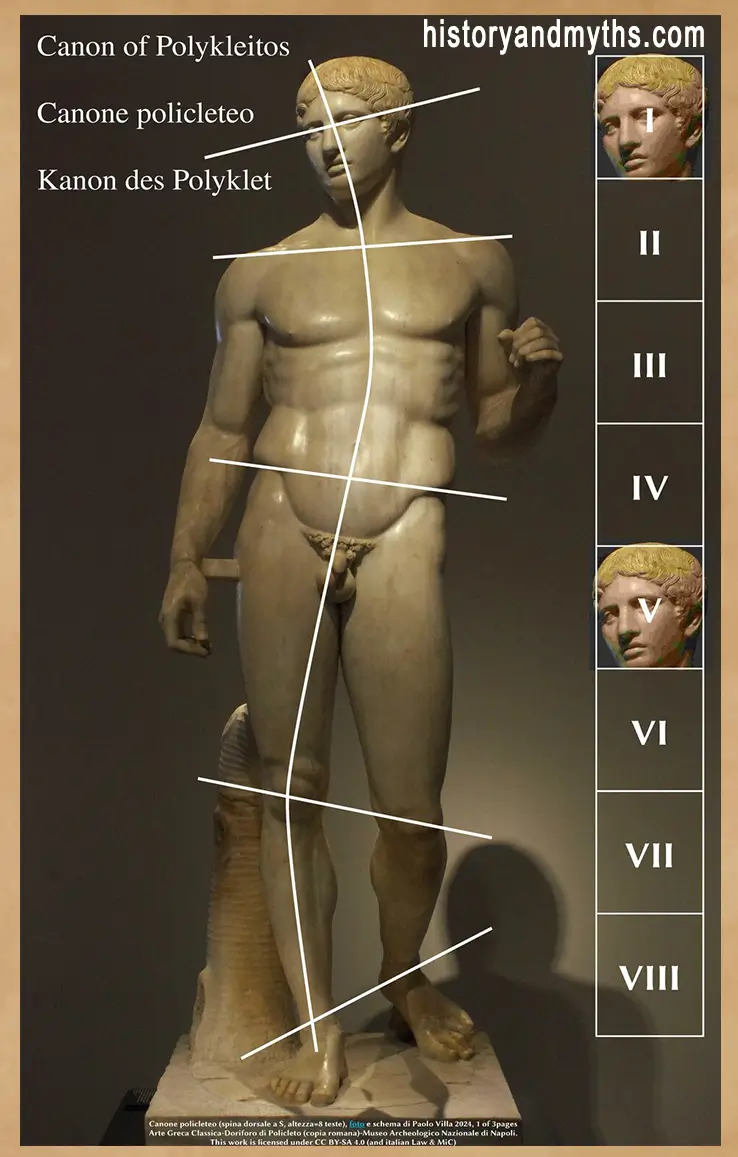
How Sculptors Created the Illusion of Life
Greek sculptors did not create movement directly. They constructed conditions that make the body appear capable of movement. This distinction is central. The figure remains still, but its structure suggests that it could shift, turn, or step forward without breaking balance.
This effect begins with weight distribution. When the body rests unevenly, tension appears in some areas and relaxes in others. The supporting leg becomes firm, while the free leg softens. This contrast creates a natural flow through the body, making it feel responsive rather than fixed.
Surface treatment reinforces this structure. Muscles are not carved as isolated details, but as part of a continuous system that follows the direction of movement. Lines guide the eye across the figure, linking different parts into a single visual path. The viewer does not see separate elements, but a connected form.
Subtle asymmetry also plays a role. Perfect symmetry removes tension and makes the figure appear artificial. Slight variations in posture, alignment, and detail introduce enough difference to suggest life without disrupting stability. The figure feels active, even in stillness.
What results is not realism in a literal sense, but controlled realism. The sculptor does not reproduce motion. Instead, the body is arranged so that the viewer perceives it as capable of motion. The illusion comes from structure, not action.
Continue Reading
Greek Sculpture vs Egyptian Sculpture
Greek and Egyptian sculpture are built on different systems, even when they depict the same subject: the human body. The difference lies in how each tradition organizes structure, proportion, and meaning.
Egyptian sculpture is based on stability through fixed rules. The body is constructed using a strict frontal system where each part is presented from its most recognizable angle. Weight is evenly distributed, movement is avoided, and the figure remains consistent across all representations. The goal is continuity, not variation.
Greek sculpture, by contrast, is based on balance rather than symmetry. The body is allowed to shift, adjust, and redistribute weight. This creates internal relationships between different parts of the figure. Instead of presenting the body as a fixed form, it is constructed as a system that responds to its own structure.
Proportion also works differently. Egyptian figures follow established grids that ensure consistency and repetition. Greek sculptors use proportion more flexibly, adjusting relationships to achieve visual balance rather than strict uniformity. The result is a form that appears natural without being identical to real bodies.
The two systems reflect different priorities. Egyptian sculpture emphasizes permanence, clarity, and symbolic order. Greek sculpture focuses on internal coherence, balance, and the controlled appearance of life. Both are structured, but they solve the problem of representing the human body in fundamentally different ways.
Why Greek Sculpture Still Matters
Greek sculpture remains relevant because it established a method for organizing the human form that is still used, even when the style has changed. The idea that the body must be constructed through proportion, balance, and controlled variation did not disappear—it became a foundation for later artistic and architectural practices.
What continues to matter is not the appearance of the statues, but the logic behind them. The concept of distributing weight, simplifying anatomy, and adjusting form to match perception is still applied in drawing, sculpture, and digital modeling today. The same problem remains: how to make a static form feel stable, natural, and internally consistent.
Greek sculptors solved this problem by treating the body as a system rather than a collection of parts. That approach allows the figure to hold together visually without relying on movement or expression. It creates a form that can be understood immediately, without explanation.
This is why Greek sculpture is still studied. It does not represent a specific time or style as much as it defines a way of thinking about form—one that prioritizes structure, clarity, and control over surface detail.
Key Takeaways
- Greek sculpture is a system based on proportion, not direct imitation
- The human body is reconstructed to achieve balance and stability
- Contrapposto introduced controlled asymmetry and realism
- Anatomy is simplified to support structure, not detail
- The illusion of life comes from weight distribution, not movement
- Greek sculpture differs from Egyptian by prioritizing balance over symmetry
- The system remains influential in modern art and design
Frequently Asked Questions
What defines Greek sculpture?
Greek sculpture is defined by proportion, balance, and controlled anatomy, forming a system that constructs the ideal human body.
What is contrapposto in Greek sculpture?
Contrapposto is a posture where weight is shifted onto one leg, creating balance and a natural appearance.
Why are Greek statues idealized?
They were designed to represent a balanced and stable version of the human body rather than real individuals.
How did Greek sculpture evolve?
It developed from rigid, symmetrical forms to balanced and dynamic figures through controlled adjustments in posture and proportion.
What is the purpose of proportion in Greek sculpture?
Proportion ensures that all parts of the body relate logically, creating a unified and stable form.
How is Greek sculpture different from Egyptian sculpture?
Greek sculpture focuses on balance and movement, while Egyptian sculpture emphasizes symmetry and permanence.
Why does Greek sculpture appear lifelike?
Because of controlled weight distribution, subtle asymmetry, and structured anatomy that create the illusion of life.
Sources & Rights
- Boardman, John. Greek Sculpture: The Archaic Period.
- Boardman, John. Greek Sculpture: The Classical Period.
- Boardman, John. Greek Sculpture: The Late Classical Period.
- Smith, R.R.R. Hellenistic Sculpture.
- Ridgway, Brunilde S. Greek Sculpture.
- Pollitt, J.J. Art in the Hellenistic Age.
- Neer, Richard. Art and Archaeology of the Greek World.
- Pedley, John Griffiths. Greek Art and Archaeology.
- Hurwit, Jeffrey M. The Art and Culture of Early Greece.
- Stewart, Andrew. Greek Sculpture: An Exploration.
- Spivey, Nigel. Understanding Greek Sculpture.
- Osborne, Robin. Archaic and Classical Greek Art.
- Fletcher, Banister. A History of Architecture.
- Honour, Hugh & Fleming, John. A World History of Art.
- Janson, H.W. History of Art.
- Ling, Roger. Greek Sculpture.
- Beazley, J.D. Attic Sculpture.
- Carpenter, Thomas H. Art and Myth in Ancient Greece.
- Richter, Gisela M.A. The Sculpture and Sculptors of the Greeks.
- Mattusch, Carol. Greek Bronze Statuary.
Written by H. Moses — All rights reserved © Mythology and History