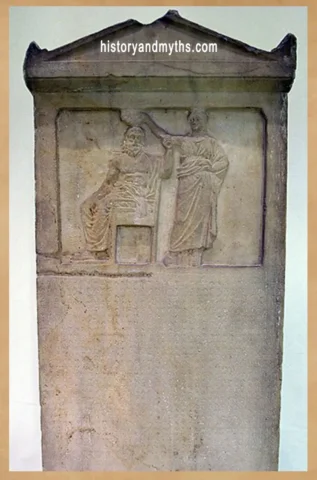
Ancient Greek Medicine and Healing: How Doctors Treated Disease
Ancient Greek medicine combined observation-based treatment with long-standing healing traditions, creating a system that could both explain illness and attempt to manage it. Physicians studied symptoms, tracked changes in the body, and adjusted treatment through diet, remedies, and controlled interventions rather than relying only on ritual. At the same time, healing temples dedicated to Asclepius offered an alternative path centered on divine guidance. In practice, Greek healing operated on two parallel tracks—one grounded in systematic diagnosis and care, the other in religious experience—giving patients more than one way to seek recovery.
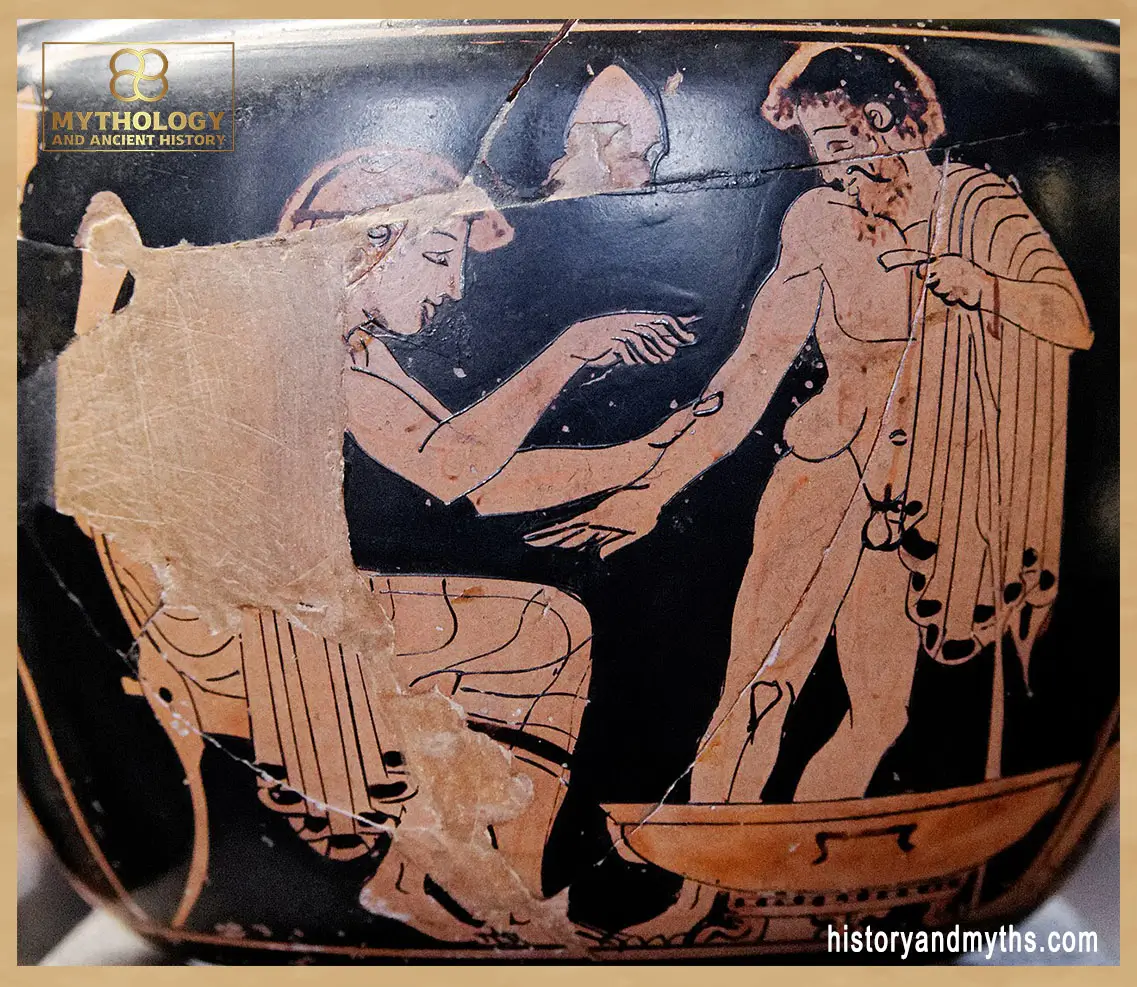
What Was Greek Medicine?
Greek medicine was a practice built on observation and adjustment. Physicians did not begin with fixed diagnoses; they began by watching the patient—pulse, appetite, sleep, temperature, and visible changes in the body—and used that information to decide what to do next. The approach was incremental: observe, act, reassess.
There was no single institution controlling care. Practitioners worked independently, often traveling, and built their reputation on outcomes. What defined the field was not a license but a method—consistent attention to the patient’s condition over time and a willingness to modify treatment as new signs appeared.
Underlying this practice was a simple idea: illness could be understood through patterns in the body, not only through divine causes. That shift made room for a repeatable process. Different physicians might disagree on interpretation, but they shared a common habit of tracking the course of a disease and intervening in ways that could be tested against the patient’s response.
Greek medicine therefore functioned as a working system rather than a fixed doctrine. It did not depend on one theory or one place. It depended on a way of handling illness—measured, responsive, and grounded in what could be seen and followed over time.
| Stage | Method | Goal | Key Feature |
|---|---|---|---|
| Diagnosis | Observation over time | Understand disease progression | Track symptoms continuously |
| Theory | Humoral balance | Explain illness | Hot/cold, wet/dry model |
| Treatment | Diet, herbs, interventions | Restore balance | Adaptive response |
| Surgery | Limited physical procedures | Correct visible problems | Practical and controlled |
| Prevention | Daily regimen | Reduce illness risk | Routine-based health |
| Alternative Healing | Temple rituals | Spiritual recovery | Dream interpretation |
How Greek Doctors Diagnosed Disease
Diagnosis began with direct observation over time, not a single examination. A physician would watch how a condition unfolded—changes in fever, breathing, appetite, sleep, and bodily functions—then use that progression to judge what the illness was doing and where it might lead. The aim was to read the trajectory of the disease, not just label it.
Case tracking mattered. Notes were kept on the sequence of symptoms and on specific turning points—moments when a patient improved, worsened, or stabilized. These shifts, often called crises, were used to estimate outcomes and to decide whether to intervene or wait. Timing was part of diagnosis: acting too early or too late could change the result.
Examination relied on what could be sensed without instruments. Physicians inspected the body, listened to the patient’s account, and paid attention to outputs such as urine, stool, and sputum for signs of internal imbalance. Environment and habits were included as factors—diet, water source, climate, and daily routine—because they influenced how a condition developed.
The result was a provisional judgment that could be revised. As new signs appeared, the diagnosis was adjusted and treatment changed accordingly. Accuracy came from continuity—staying with the case and refining decisions as evidence accumulated—rather than from a one-time assessment.
The Theory Behind Greek Medicine (Humors System)
Greek medicine explained illness through a model of four bodily fluids—blood, phlegm, yellow bile, and black bile—each associated with qualities such as hot, cold, wet, and dry. Health meant these elements were in balance; disease meant one had become dominant or displaced.
The model was not used as abstract philosophy. It provided a working framework for deciding what to change. If a condition appeared “hot and dry,” treatment aimed to counter it with cooling or moistening measures; if it appeared “cold and wet,” the response moved in the opposite direction. The physician translated observed signs into a direction for intervention.
Crucially, the system focused on conditions, not named diseases. The same set of symptoms could be interpreted differently depending on the patient’s state and the stage of the illness. This allowed flexibility: treatment could shift as the balance shifted, rather than being locked to a fixed label.
The value of the humoral model was its operational use. It turned observations into decisions—what to add, what to remove, and when to act—without requiring precise knowledge of internal anatomy.
Ancient Greek medicine was based on observation, adjustment, and routine. Physicians tracked symptoms over time, applied treatments through diet and remedies, and modified care as conditions changed. Alongside this system, temple healing offered a parallel path based on ritual and interpretation.
© historyandmyths.com — Educational use
Treatment Methods: How They Actually Healed
Treatment focused on changing the patient’s condition in controlled ways rather than applying a single cure. The first lever was diet. Physicians adjusted food and drink—quantity, type, and timing—to shift the body’s state. Lighter meals, diluted wine, broths, or temporary restriction were used to stabilize digestion and reduce stress on the body.
Medicinal substances were chosen for their specific effects. Plant-based preparations could stimulate, calm, purge, or relieve pain, depending on how they were prepared and administered. The goal was targeted action—address a symptom or a pattern without disrupting the whole system.
Physical interventions were used when necessary. Procedures such as bloodletting or induced purging aimed to remove excess or harmful material. These were not routine; they were applied when observation suggested that removal would change the course of the illness.
Equally important was the regimen—sleep, movement, and environment. Rest could be prescribed to conserve strength, or gentle activity to prevent stagnation. Adjustments to exposure—shade, air, and temperature—helped manage the body’s response during recovery.
Treatment was adaptive. Physicians monitored response and altered the plan as conditions changed. What mattered was not adherence to a fixed recipe but maintaining control over the patient’s trajectory until stability returned.
Surgery and Medical Tools
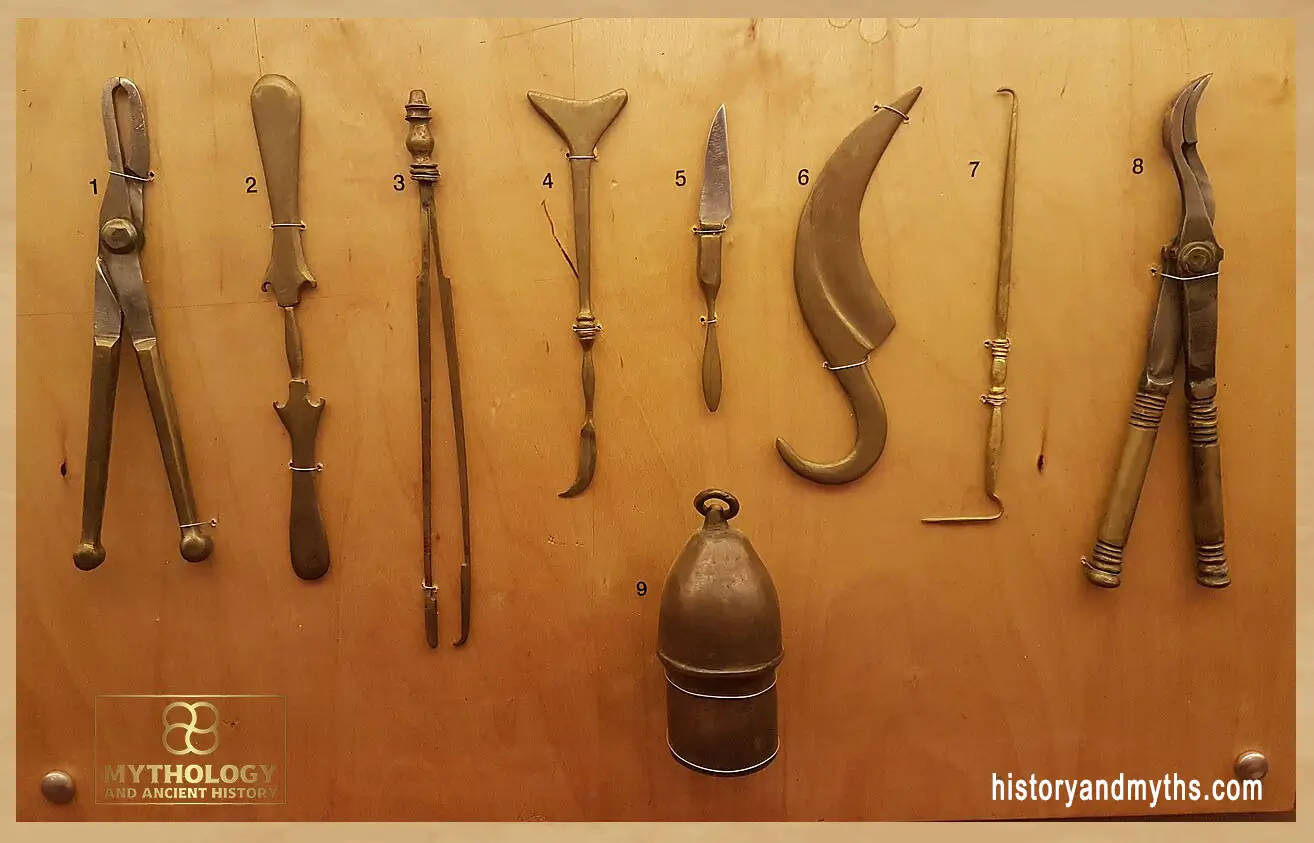
Surgical intervention existed but was targeted and limited to conditions that could be reached and managed directly. Physicians treated wounds, set fractures, and addressed surface problems such as abscesses. The aim was practical correction—stabilize what could be stabilized—rather than invasive exploration.
Tools were simple and designed for specific tasks: knives for incision, probes for examining depth and direction, forceps for handling tissue, and cautery for controlling bleeding. Their effectiveness depended less on complexity and more on controlled use and experience. Precision came from familiarity with the procedure, not from elaborate equipment.
Technique mattered. Wounds were cleaned and dressed, fractures aligned and immobilized, and pressure or heat applied when needed to stop bleeding. Each step followed a clear purpose, with minimal variation once the approach was chosen. There was little room for improvisation because outcomes depended on consistency and timing.
What defines Greek surgery is restraint. Procedures were used when the problem was visible and accessible, and avoided when risk outweighed benefit. This kept intervention within a range where results could be managed, aligning surgical practice with the broader method of observation and controlled response.
Healing in Temples vs Medical Practice
Greek healing operated along two parallel paths that addressed illness in different ways. In sanctuaries dedicated to Asclepius, patients sought recovery through ritual and interpretation. They underwent purification, made offerings, and spent the night in the sanctuary, expecting guidance through dreams. These experiences were then interpreted by attendants, who advised actions based on what was revealed.
This approach did not rely on tracking symptoms or adjusting treatment over time. Its authority came from the setting and the expectation of divine intervention. The process was structured, but it followed a different logic: meaning was derived from symbolic experience rather than physical observation.
By contrast, physicians worked through continuous assessment and modification. They followed the patient’s condition day by day, changed diet or remedies as needed, and judged progress by measurable changes. Their method depended on staying with the case and responding to it directly.
These two paths coexisted because they served different needs. One offered explanation and reassurance within a religious framework; the other provided a method for managing the body through observable changes. Patients could move between them, but the underlying principles remained distinct.
Prevention: Daily Health System
Prevention in Greek medicine was built around regimen—a structured way of living that reduced the chance of illness developing in the first place. Physicians advised on food quantity, meal timing, and drink dilution to keep digestion stable and avoid sudden strain on the body. The goal was steadiness, not excess.
Physical activity was used as a regulating tool. Movement was prescribed in measured amounts to maintain circulation and prevent stagnation, while overexertion was avoided to reduce fatigue. This balance linked health directly to routine rather than to occasional intervention.
Sleep and environment were managed with the same precision. Regular sleep supported recovery, and exposure to air, temperature, and seasonal change was adjusted to keep the body within a tolerable range. Patients were guided to adapt habits as conditions shifted rather than maintain a fixed pattern year-round.
Prevention worked because it reduced variability. By controlling daily inputs—food, activity, rest, and surroundings—the body was kept within limits where illness was less likely to take hold. This approach did not eliminate disease, but it lowered risk by maintaining consistent internal conditions.
Why Greek Medicine Mattered
Greek medicine mattered because it established a workable method for dealing with illness that did not depend on a single authority or setting. By treating care as an ongoing process—observe, decide, adjust—it made outcomes less dependent on chance and more dependent on how the case was managed.
It also changed what counted as evidence. Progress was judged by changes in the patient, not by adherence to a ritual or a fixed explanation. That shift allowed different practitioners to compare results and refine their approach, even when they disagreed on theory.
The impact was practical. Patients could receive care that responded to their condition as it evolved, and physicians could intervene at specific moments rather than apply the same response regardless of timing. This made treatment more predictable within the limits of the period.
In effect, Greek medicine provided a repeatable framework for diagnosis, treatment, and prevention. Its importance lies in how it organized care into a system that could be applied across cases, rather than in any single remedy or doctrine.
Greek medicine worked as a coherent system of care built on observation, controlled intervention, and daily management. Diagnosis followed the course of illness over time; treatment adjusted diet, remedies, and procedures based on response; prevention stabilized the body through routine. In parallel, temple healing offered a different route grounded in ritual and interpretation, giving patients an alternative framework for recovery.
What holds the system together is continuity. Care did not rely on a single act or place but on tracking and adjusting until the patient stabilized. That structure made outcomes more manageable within the limits of the period and turned medical practice into something that could be repeated across cases.
- Greek medicine relied on observation rather than fixed diagnosis.
- The humoral system guided how physicians interpreted illness.
- Treatment focused on diet, remedies, and controlled intervention.
- Surgery was limited to visible and manageable conditions.
- Prevention was based on daily routine and lifestyle control.
- Temple healing offered a separate religious approach to recovery.
- The system worked through continuous adjustment, not one-time cures.
Frequently Asked Questions
How did ancient Greek doctors treat disease?
They used observation, diet, herbal remedies, and controlled interventions to manage illness.
What was the humoral theory?
It was the idea that health depended on the balance of four bodily fluids.
Did Greeks perform surgery?
Yes, but only for visible and manageable conditions such as wounds and fractures.
What role did Hippocrates play in Greek medicine?
He helped establish observation-based medical practice.
Was Greek medicine scientific?
It was based on observation and reasoning, though limited by the knowledge of the time.
Did people rely on temple healing?
Yes, many sought healing through rituals in temples dedicated to Asclepius.
Sources & Rights
- Nutton, Vivian. Ancient Medicine. Routledge.
- Longrigg, James. Greek Medicine. Routledge.
- Jouanna, Jacques. Hippocrates. Johns Hopkins University Press.
- King, Helen. Greek and Roman Medicine. Bristol Classical Press.
- Totelin, Laurence. Hippocratic Recipes. Brill.
- Craik, Elizabeth. The “Hippocratic” Corpus. Routledge.
- Hanson, Ann Ellis. Ancient Greek Medicine. Oxford University Press.
- Riddle, John M. Dioscorides on Pharmacy and Medicine. University of Texas Press.
- Scarborough, John. Roman Medicine. Cornell University Press.
- Temkin, Owsei. Galenism. Cornell University Press.
- Porter, Roy. The Greatest Benefit to Mankind. HarperCollins.
- Garrison, Fielding. An Introduction to the History of Medicine.
- Hippocrates. Collected Works.
- Pliny the Elder. Natural History.
- Aristotle. On the Parts of Animals.
- Jones, W.H.S. Hippocrates. Loeb Classical Library.
- Dean-Jones, Lesley. Women’s Bodies in Classical Greek Science. Oxford University Press.
- Edelstein, Emma & Ludwig. Asclepius. Johns Hopkins University Press.
- Prioreschi, Plinio. A History of Medicine. Horatius Press.
- Green, Monica H. Making Women’s Medicine Masculine. Oxford University Press.
Written by H. Moses — All rights reserved © Mythology and History