Greek Gods in Daily Life: Roles, Rituals, and Worship Explained
Greek gods were not abstract figures in stories; they were active parts of decision-making and daily life. People did not approach all gods in the same way. Each deity had a specific role, and choosing the right one depended on the situation—war, travel, farming, or political action.
This raises a practical question: how did Greeks decide which god to worship? The answer lies in function. Athena was invoked for strategy, Poseidon for the sea, Demeter for agriculture. Religion worked as a system where different gods addressed different needs, and rituals were directed accordingly.
Understanding Greek gods requires moving beyond lists of names. The key is to see how they were used—when they were called upon, why they mattered in specific contexts, and how rituals connected human action to divine influence.
Greek gods were approached based on function, not hierarchy. People chose a specific god depending on the situation—such as war, travel, or agriculture—and performed targeted rituals to gain favor. The system worked through matching the right need with the right deity and the correct form of worship.
Why the Greeks Worshipped Many Gods
Greek religion used many gods because no single deity covered all aspects of life. Each god represented a specific domain—war, agriculture, the sea, craft, or governance. This division allowed people to direct rituals precisely, depending on the situation they faced.
This system was practical rather than theological. Instead of asking which god was supreme, Greeks focused on which god was relevant. A farmer would turn to Demeter, a sailor to Poseidon, a leader to Zeus or Athena. The choice was determined by need, not hierarchy.
It also reduced uncertainty. By assigning different functions to different gods, the system created a structured way to respond to problems. Religion became a method of managing risk—approaching the appropriate divine force for a specific outcome.
The result was not fragmentation but specialization. Greek religion worked because each god had a defined role, and effective worship depended on selecting and addressing that role correctly.
| Situation | Relevant God | Type of Ritual |
|---|---|---|
| War | Athena / Ares | Sacrifices, prayers before battle |
| Sea Travel | Poseidon | Offerings for safe passage |
| Agriculture | Demeter | Seasonal rituals and offerings |
| Politics & Authority | Zeus | Public sacrifices and ceremonies |
| Travel & Trade | Hermes | Prayers and small offerings |
Gods by Function: Choosing the Right Deity
Greek worship followed a clear logic: match the situation to the appropriate god. This was not symbolic—it determined which rituals were performed and which offerings were made. Selecting the wrong deity meant the act had little value, even if the ritual itself was correct.
In warfare, attention focused on Athena for strategy and Ares for combat force. The choice reflected different needs within the same context. In agriculture, Demeter was central because her domain directly affected crop success. For travel or sea activity, Poseidon became the primary focus due to his control over waters and storms.
This system extended into civic and political life. Leaders invoked Zeus for authority and order, while cities often favored specific deities that reflected their identity or priorities. The selection was not random; it followed established patterns shaped by tradition and practical experience.
What defines this structure is precision. Greek religion required targeted action—identifying the correct divine function and directing ritual toward it. Worship was effective when it aligned with the specific role assigned to each god.
Gods in Ritual Practice
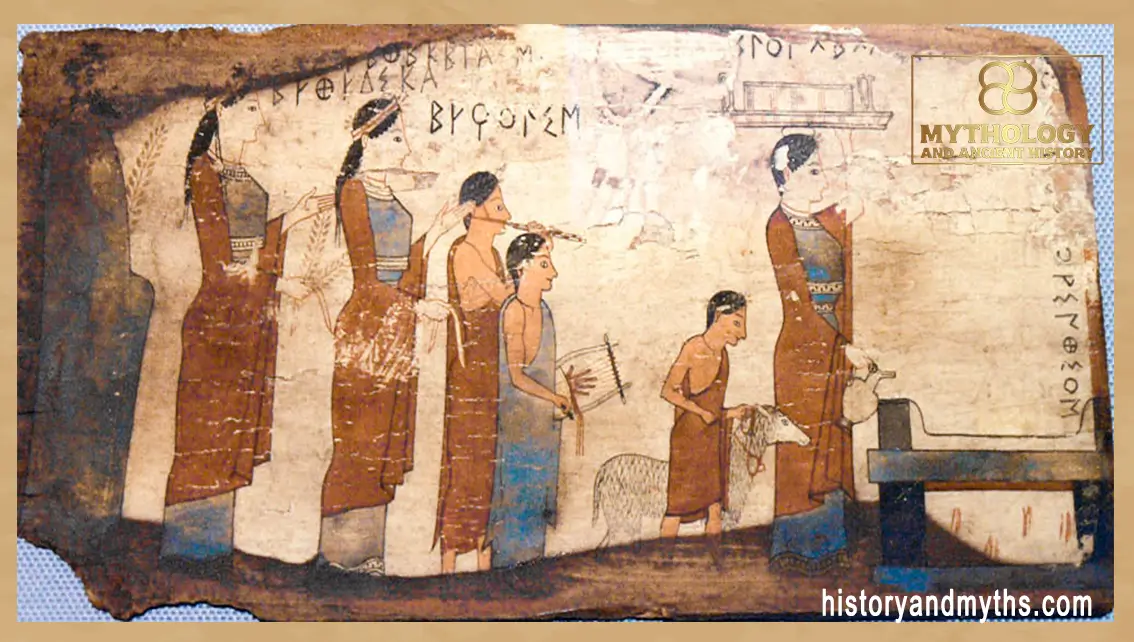
Greek gods were engaged through specific, directed rituals, not general worship. Each ritual was tailored to the deity’s function, including the type of offering, the wording of the prayer, and the context in which it was performed. The act was effective only when it matched the god being addressed.
Offerings varied by purpose. Agricultural rituals to Demeter focused on fertility and seasonal cycles, while sacrifices to Poseidon often occurred before sea journeys. Military contexts involved different forms of dedication, directed toward gods associated with conflict or strategy. The structure remained consistent, but the target and intention changed with the situation.
Ritual precision mattered. The correct god had to be invoked with the correct form of address and offering. Mistakes were not interpreted as moral failure but as ineffective action—an error in execution rather than belief.
This reinforces the functional nature of the system. Greek religion operated through alignment between need, deity, and ritual, where success depended on directing the right action to the right god at the right time.
Gods in Daily Decisions
Greek gods were consulted in practical, everyday choices, not only during major events. Before travel, a person might make offerings to Poseidon or Hermes; before planting, attention would turn to Demeter; before public action, leaders could invoke Zeus or Athena. Religion functioned as a guide for managing uncertainty in routine situations.
These decisions followed established patterns. The choice of deity depended on the type of risk involved—natural, social, or political. This created a consistent framework in which individuals knew which god to approach without needing formal instruction.
Importantly, this process did not replace judgment. People still made decisions based on experience and circumstance, but religious practice added a layer of ritual confirmation. By aligning action with divine oversight, individuals reinforced the legitimacy of their choices.
In this way, Greek gods were integrated into daily life as decision-support mechanisms. Their role was not abstract; it was tied to specific actions, outcomes, and contexts that shaped how people navigated the world.
How Greek Gods Were Used in Practice
- Each god represented a specific function or domain.
- Rituals were directed toward the relevant deity based on the situation.
- Correct alignment between need, god, and ritual was essential.
- Religion operated through action, not belief.
- Both individuals and city-states followed the same system.
Local vs Pan-Hellenic Gods
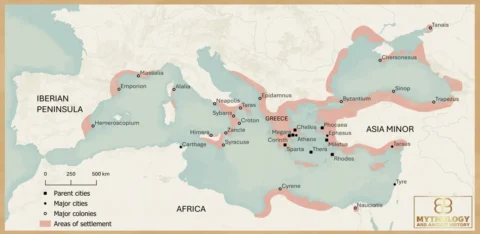
Greek worship operated at two levels: local and pan-Hellenic. At the local level, each city-state emphasized specific deities that reflected its identity and needs. Athens prioritized Athena, while other cities favored different gods based on tradition, geography, or political focus.
At the same time, there were pan-Hellenic gods and sanctuaries shared across the Greek world. Sites like Delphi or Olympia attracted visitors from multiple regions, creating a common religious framework beyond individual cities. These shared spaces reinforced connections between otherwise independent communities.
This dual structure allowed flexibility without fragmentation. Local practices could vary, but they remained compatible with broader traditions. A person could participate in city-specific rituals while also engaging with widely recognized deities and festivals.
The system worked because it balanced local identity with shared structure. Greek religion did not require uniformity; it maintained cohesion through overlapping practices that operated at different scales.
Gods and Civic Identity
Greek gods were closely tied to the identity of each city-state. A polis did not just worship the gods in general; it emphasized particular deities that reflected its values, priorities, and political character. This connection shaped how religion functioned at the civic level.
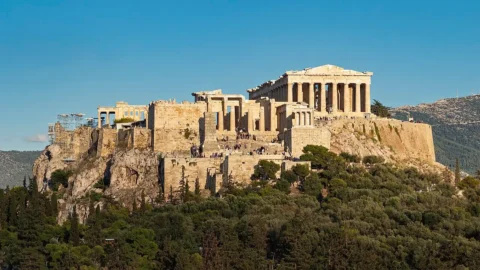
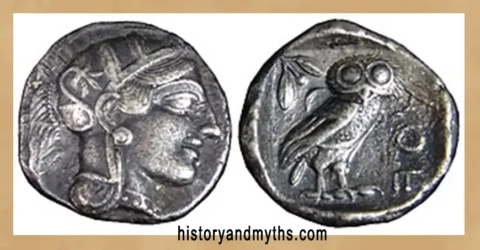
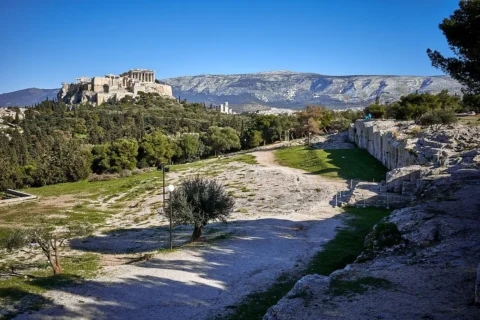
Athens is the clearest example. The city’s association with Athena was not symbolic alone—it influenced festivals, public rituals, and even political identity. Major events such as the Panathenaic Festival reinforced this connection by linking devotion to civic unity and authority.
Other cities followed similar patterns. A community’s primary deity could define its public image, its sacred spaces, and its collective traditions. This created a system in which religion was not separate from the city, but part of how the city presented itself internally and externally.
As a result, Greek gods functioned not only as divine figures but as markers of civic identity. They connected religious practice with political structure, reinforcing the idea that belonging to a city also meant participating in its specific form of worship.
Continue Reading
Limits and Flexibility of the System
The Greek system of gods was structured but not rigid. While each deity had defined roles, boundaries between functions were not absolute. Multiple gods could be invoked in the same context depending on the situation, allowing flexibility without abandoning structure.
This flexibility also applied to interpretation. Individuals and communities could emphasize different aspects of a god or adapt rituals to local conditions. There was no central authority enforcing uniform practice, so variation was expected rather than seen as a problem.
At the same time, limits existed. Rituals still followed established patterns, and choosing the appropriate god remained essential. The system worked because it balanced consistency in practice with adaptability in application.
This combination allowed Greek religion to function across different regions and contexts. It provided enough structure to guide action, while remaining flexible enough to respond to changing needs without losing coherence.
How the System Worked in Practice
In practice, Greek religion operated as a step-by-step process rather than a set of abstract beliefs. A situation arose—travel, war, farming—and the individual or community identified the relevant risk. From there, they selected the appropriate god, prepared the correct offering, and performed the ritual according to established forms.
Each step depended on alignment. The right god, the right context, and the right ritual had to match. If one element was incorrect, the act was considered ineffective, not immoral. This approach treated religion as a practical system for managing outcomes rather than a test of belief.
The same logic applied at both individual and civic levels. A household might perform a small offering before a journey, while a city-state organized large-scale rituals before war or political decisions. The scale changed, but the structure remained the same.
This explains the consistency of Greek religion across different contexts. It functioned through repeatable actions, where success depended on correct execution rather than uniform belief or centralized control.
Key Takeaways
- Greek gods were approached based on function, not hierarchy.
- Choosing the correct god was essential for effective rituals.
- Religion guided decisions in war, travel, agriculture, and politics.
- Local traditions shaped how gods were emphasized.
- The system worked through consistent practice rather than fixed belief.
Frequently Asked Questions
How did Greeks choose which god to worship?
They selected a god based on the situation, such as war, travel, or agriculture, and directed rituals accordingly.
Did Greeks worship all gods equally?
No. Different gods were approached depending on specific needs or contexts.
What was the main purpose of Greek gods in daily life?
They guided decisions and helped manage uncertainty through ritual practice.
Were Greek gods tied to specific cities?
Yes. Many city-states emphasized particular gods that reflected their identity and priorities.
Was belief or ritual more important in Greek religion?
Ritual was more important. Correct performance of actions mattered more than belief.
Sources & Rights
- Burkert, Walter. Greek Religion. Harvard University Press.
- Parker, Robert. On Greek Religion. Cornell University Press.
- Mikalson, Jon D. Ancient Greek Religion. Wiley-Blackwell.
- Harrison, Jane Ellen. Prolegomena to the Study of Greek Religion. Cambridge University Press.
- Nilsson, Martin P. A History of Greek Religion. Oxford University Press.
- Bremmer, Jan N. Greek Religion. Oxford University Press.
- Price, Simon. Religions of the Ancient Greeks. Cambridge University Press.
- Cartledge, Paul. Ancient Greece: A Very Short Introduction. Oxford University Press.
- Osborne, Robin. Greece in the Making 1200–479 BC. Routledge.
- Boardman, John. The Oxford History of Greece and the Hellenistic World. Oxford University Press.
- Hansen, Mogens Herman. An Inventory of Archaic and Classical Poleis. Oxford University Press.
- Flower, Michael A. The Seer in Ancient Greece. University of California Press.
- Kindt, Julia. Rethinking Greek Religion. Cambridge University Press.
- Fowler, Robert. Early Greek Mythography. Oxford University Press.
- Versnel, H.S. Coping with the Gods. Brill.
- Graf, Fritz. Greek Mythology: An Introduction. Johns Hopkins University Press.
- Scullion, Scott. Greek Religious Rituals. Oxford University Press.
- Encyclopaedia Britannica. Ancient Greek Religion.
- World History Encyclopedia. Greek Religion.
- Oxford Classical Dictionary. Greek Religion.
Written by H. Moses — All rights reserved © Mythology and History