Electra (Pleiad) — The Star-Nymph and the Lost Light of Troy
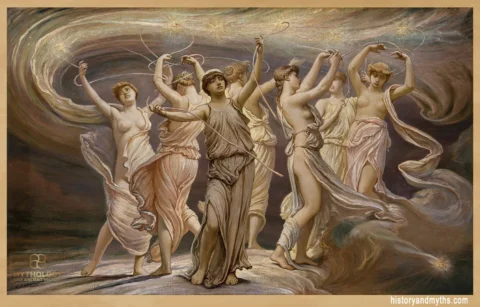
Among the shining daughters of Atlas, one name glimmers with a softer, more sorrowful light — Electra, the amber-haired nymph whose story binds the heavens to the mortal world. In Greek mythology, she was one of the Pleiades, seven radiant sisters who danced across the night sky, transformed into stars by the will of Zeus. Yet, while her sisters remained serene in their celestial harmony, Electra’s fate turned toward tragedy. Hers is not merely a tale of divine beauty, but of grief, loss, and legacy — a myth that echoes in both the stars and the bloodline of kings.
Electra was the daughter of Atlas, the Titan who held the sky upon his shoulders, and Pleione, the sea-nymph who gave her children the shimmer of light and water. From this union came seven sisters, each bearing the name of a constellation, each representing a different face of the natural world. But Electra’s role transcended her siblings’ — she became the mother of Dardanus, the legendary founder of the Trojan line, linking her directly to the rise — and eventual fall — of Troy.
In her, the Greeks saw a symbol of connection and distance: the divine made mortal, the light that mourns the earth it once illuminated. She was a goddess of ancestry, a nymph of the sky, and a star that weeps through time. To look at her constellation today is to see both the glory of heaven and the memory of ruin — a reminder that even stars can grieve.
Who is Electra? — The Pleiad Star-Nymph and Mother of Kings
In the heart of early Greek cosmology, Electra stood as one of the most luminous figures among the Pleiades, the seven star-nymphs born of Atlas and Pleione. Her name, derived from the Greek ēlektron, means amber or shining one — a reflection of her glowing essence, and perhaps an echo of the soft, golden light that fills the dawn before sunrise. Ancient poets often described her as radiant yet distant, a presence that shimmered with longing rather than triumph.
Like her sisters — Maia, Taygete, Alcyone, Celaeno, Sterope, and Merope — Electra was part of a divine family that united the Titans of the sky with the spirits of the sea. Her father, Atlas, was condemned to bear the heavens after the Titanomachy, while her mother, Pleione, dwelled near the bright shores of the Aegean. Their daughters were both celestial and earthly — guardians of the balance between light and life. To the Greeks, the Pleiades were not simply stars, but symbols of seasonal change, guiding sailors, farmers, and dreamers through the cycles of time.
Among her sisters, Electra’s story shone brightest and burned deepest. Unlike Maia, who bore Hermes, or Taygete, who was associated with Artemis, Electra’s myth carried the weight of destiny. Through her union with Zeus, she gave birth to Dardanus and Iasion, sons whose legacy would shape the mythic history of the mortal world. Dardanus became the ancestor of the Trojan kings, linking Electra’s divine lineage directly to one of the most enduring legends in Greek civilization — the founding and fall of Troy.
But even beyond her role as mother of heroes, Electra’s significance lies in her transformation from nymph to star. When Zeus placed the Pleiades in the heavens to protect them from Orion’s pursuit, Electra’s light was said to flicker — her grief too heavy to shine with her sisters. Later storytellers claimed that when Troy burned, her sorrow grew unbearable, and her star disappeared from the night sky. Thus she became “the lost Pleiad”, the sister who could no longer bear to look upon the ruin born of her own blood.
Her myth captures the Greek understanding of fate — that light and loss are never separate. Electra’s radiance was not merely that of a celestial body, but of a soul torn between heaven and earth, between immortality and mourning. Through her, the Pleiades became more than constellations — they became symbols of memory, heritage, and the bittersweet persistence of light.
| Aspect | Details |
|---|---|
| Name | Electra (Ἠλέκτρα) — One of the seven Pleiades; name means “amber” or “shining one.” |
| Parents | Atlas (Titan who holds the sky) and Pleione (sea-nymph of the Aegean). |
| Siblings | Maia, Taygete, Alcyone, Celaeno, Sterope, and Merope — the Pleiades. |
| Consort | Zeus, king of the gods, who united with her on the island of Samothrace. |
| Children | Dardanus (founder of Troy) and Iasion (lover of Demeter, father of Plutus). |
| Domain / Role | Celestial nymph representing starlight, ancestry, and the bridge between divine and mortal realms. |
| Symbols | Amber light, veil of mourning, faint star in the Pleiades cluster (the “lost Pleiad”). |
| Themes | Divine ancestry, sorrow, transformation, remembrance, and the fall of Troy. |
The Mythic Role of Electra — From Samothrace to Troy
The myth of Electra unfolds not in the halls of Olympus but upon the windswept island of Samothrace, where sky and sea meet in perpetual mist. There, beneath the gaze of the Great Gods (Kabiroi), Zeus descended to her in the form of golden light. Their union was said to have given birth to two sons — Dardanus and Iasion — whose destinies would diverge like twin flames carried by different winds.
Dardanus, the elder, was destined for greatness. He crossed the Aegean to Asia Minor, where he founded the city of Dardania, the seed from which Troy itself would grow. From his line would come Tros, Ilus, and ultimately Priam, king of Troy at its tragic fall. Through Dardanus, Electra became the celestial ancestress of the Trojans, the divine mother whose blood flowed through heroes and kings. Thus, the light of the heavens was said to shine eternally upon the plains of Ilium — the reminder that the Trojans were born of the stars.
Her other son, Iasion, met a gentler but still fateful path. He became the consort of Demeter, goddess of the harvest, and from their union was born Plutus, the god of wealth. Yet even that love ended in tragedy: Zeus struck Iasion with lightning for daring to lie with a goddess. Through him, Electra’s story mirrored the fragility of divine favor — how the line between sanctity and punishment could vanish in an instant.
After the rise of Troy, Electra’s sorrow became legend. When her descendants perished and the city burned, she could no longer bear the weight of her lineage. Ancient poets said that she veiled her star in mourning, abandoning her sisters in the sky. This is why, to stargazers, one of the Pleiades appears dimmer than the rest — the “lost” star, hidden by grief. To the Greeks, it was Electra, weeping for the city born of her son’s hands.
Her myth thus bridges cosmic and mortal time: the divine union that created empires, and the grief that followed when those empires fell. Through her, the Greeks found a reflection of their own history — the rise of civilization under divine guidance, and its inevitable fall beneath human pride. Electra’s tragedy was not only personal; it was the mourning of the universe itself, a reminder that every light in the heavens carries the memory of something lost.
Mythic Essence of Electra
- One of the seven Pleiades — star-nymph daughters of Atlas and Pleione.
- Beloved of Zeus and mother of Dardanus and Iasion, linking the divine to the Trojan bloodline.
- Her grief at the fall of Troy led her to veil her star — becoming the “lost Pleiad.”
- Symbol of light, memory, and mourning — the brightness that fades yet endures.
- Represents the eternal bridge between heavenly ancestry and earthly destiny.
© historyandmyths.com — Educational use
Symbolism and Meaning — The Star, the Lineage, and the Lost Light
To understand Electra is to look beyond genealogy and myth — to see the invisible thread the Greeks wove between the heavens and human sorrow. Her story is not merely about descent from the gods; it is about the fragility of divine light when it touches mortal fate. She is both mother and mourner, both source and silence — the living embodiment of what the ancients called moira, destiny’s unbreakable weave.
The symbolism of light and loss defines her. Her very name, Electra, comes from the glow of amber, a substance born from trees that once wept. The Greeks saw in this an echo of her grief — that light itself can be a form of mourning. Her brilliance was not that of triumph, but of endurance; a flame that continues to burn even when all else has turned to ash. Through her, the Pleiades became more than a celestial pattern — they became the memory of time, carrying the emotional pulse of creation.
Electra’s connection to Troy transforms her myth into something universal. The fall of the city is not just a tale of war and vengeance; it is the collapse of a lineage that began in the stars. When she veiled her light, the Greeks believed they could see it — one of the seven stars fading from the night sky. In that dimming, they read the lesson that even the divine grieves what it creates. Her lost star became a cosmic elegy, a soft whisper of regret woven into the constellations.
There is also a profound spiritual meaning in her transformation. Unlike mortals who die and vanish, Electra’s sorrow was eternal — it transcended death through memory. Her grief was immortalized in the heavens so that humanity would remember both its divine origin and its tragic capacity for loss. Philosophers later found in her myth a symbol of the human condition: the eternal striving toward light, always shadowed by awareness of impermanence.
To poets, Electra was not only a Pleiad; she was the prototype of memory — the one who watches her descendants rise and fall from above. Every time her star flickered, it was as if the universe itself sighed. Her myth asks a question that lingers beyond time: Can divinity survive love for the mortal world? The Greeks, gazing at her faint star, seemed to answer — only through remembrance.
Cultural Legacy and Artistic Depictions — From Ancient Sky to Modern Mind
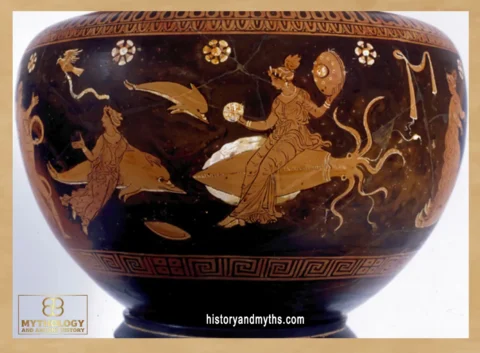
Through time, Electra became far more than a mythic mother or dim star in the sky — she evolved into an enduring symbol of grief, resilience, and memory. In Greek art, she rarely appeared as a distinct figure; instead, her essence lived in the depictions of the Pleiades, graceful women clothed in light, their faces turned toward the heavens. On red-figure pottery and carved reliefs, they were shown as dancers, nymphs in motion, symbolizing the eternal cycle of the seasons. Among them, Electra was imagined as the one whose gaze looked downward — the sister who could not forget what she had lost.
In astronomy, her name survived as one of the brightest stars in the Pleiades cluster, located in the constellation Taurus. Ancient stargazers noted her subtle shimmer and wove her sorrow into celestial lore. The idea of the “lost Pleiad” — the star that dimmed or disappeared — was repeated by poets from Aratus to Ovid. To them, her fading light marked the boundary between divine perfection and human sorrow. Every time her star seemed to vanish, it reminded the Greeks of Troy’s fall, of how even the brightest lineage could be consumed by destiny.
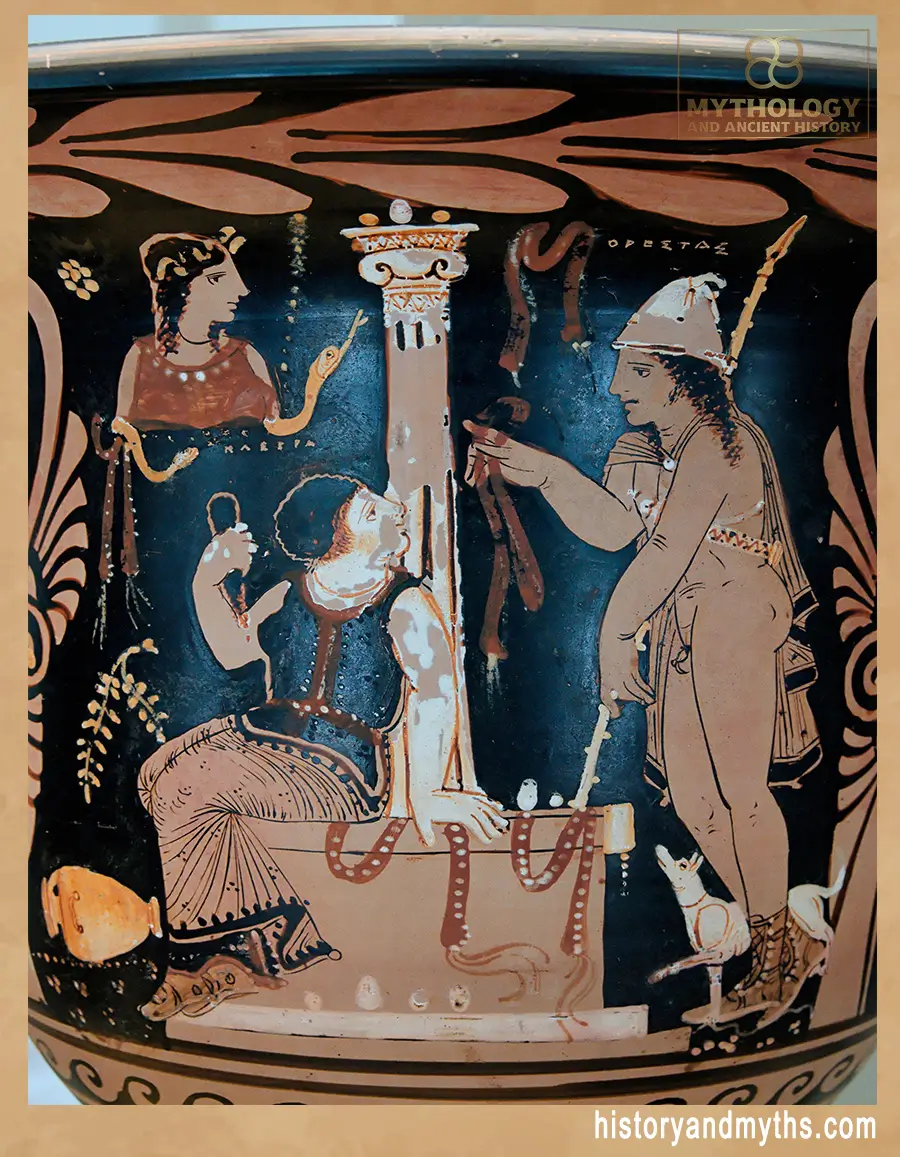
Electra’s name reemerged centuries later in literature, transformed but still luminous. In tragedy, the playwrights Aeschylus, Sophocles, and Euripides used her name again for another Electra — the mortal daughter of Agamemnon — whose story of vengeance and grief mirrored her starry namesake. The repetition was no coincidence: both women bore sorrow that defied time, both were remembered through endurance rather than joy. Thus, “Electra” became a cultural archetype of mourning and defiance, an image of the woman who carries memory against oblivion.
In modern thought, the name still resonates. The “Electra complex” coined by Carl Jung refers to the psychological struggle of attachment and loss — once again connecting her name to emotion, to the invisible forces that shape the human heart. Even in science, her star continues to guide astronomers, and her myth continues to inspire artists and writers who look to the heavens for meaning.
Through myth, art, and starlight, Electra’s legacy endures. She stands at the meeting point of memory and cosmos, a light that both illuminates and laments. Her story reminds us that the ancient Greeks, in naming the stars, were also naming their own emotions — and that some lights, no matter how faint, never truly go out.
Conclusion — The Light That Mourns
In the end, Electra’s story is less about loss than about endurance — the persistence of light even when dimmed by sorrow. She was born of Titans and sea-spirits, gave birth to kings and heroes, and became a star whose faint glow still carries the memory of Troy. Through her, the Greeks told the truth they felt in every change of season and every fall of empire: that creation and grief are inseparable, and that the brightest beauty is often born from the shadow of tragedy.
When her star flickers in the night sky, it does not vanish — it remembers. That fading light is the soul of the myth itself, the echo of a goddess who could not bear to watch the fall of her own descendants. Yet in her grief, she achieved something even the Olympians could not: she bridged mortality and eternity, her sorrow becoming a constellation that has never ceased to shine.
To gaze upon the Pleiades is to look upon memory made visible — the enduring spirit of a mother, a mourner, and a light that still weeps for what was lost.
Electra remains the reminder that the heavens are not indifferent, but alive with remembrance — that even in the vast silence of the cosmos, there are tears of stars.
Key Takeaways — The Star That Remembers
- Electra was one of the seven Pleiades, daughters of Atlas and Pleione, whose light filled the Greek night sky.
- Through her union with Zeus, she became the mother of Dardanus and Iasion, linking the heavens to Troy’s royal bloodline.
- When Troy fell, her grief dimmed her star — making her the legendary “lost Pleiad.”
- She symbolizes light intertwined with sorrow, showing how beauty and tragedy coexist in myth and nature alike.
- Her name, meaning “amber” or “shining one,” reflects both her radiance and her enduring remembrance.
- Electra’s story bridges cosmic immortality and human fragility — the eternal link between stars and souls.
© historyandmyths.com — Educational use
Frequently Asked Questions
Who is Electra in Greek mythology?
Electra is one of the seven Pleiades, daughters of Atlas and Pleione, known as the mother of Dardanus and Iasion.
What does the name “Electra” mean?
The name comes from the Greek ēlektron, meaning “amber” or “shining one,” symbolizing radiant light and memory.
Who were Electra’s children?
She bore two sons with Zeus — Dardanus, the founder of Troy’s royal line, and Iasion, consort of Demeter and father of Plutus.
Why is Electra called the “lost Pleiad”?
Ancient poets said her star dimmed or vanished after the fall of Troy, as she mourned her descendants’ destruction.
Where was Electra’s myth centered?
Her story is tied to the island of Samothrace, where Zeus united with her and their sons were born.
What is Electra’s connection to Troy?
Her son Dardanus founded Dardania, which became the foundation of Troy, linking Electra’s divine bloodline to mortal kings.
What does Electra symbolize?
She represents light, grief, and transformation — the union of divine ancestry and mortal destiny.
Is Electra the same as the tragic heroine in Greek plays?
No. The Pleiad Electra is a celestial nymph, while the later tragic Electra was a mortal princess of Mycenae.
What star represents Electra?
Her star is one of the brightest in the Pleiades cluster in the constellation Taurus — sometimes thought to fade in mourning.
Sources & Rights
- Hesiod. Theogony. Translated by Hugh G. Evelyn-White. Loeb Classical Library, Harvard University Press, 1914.
- Apollodorus. The Library. Translated by Sir James George Frazer. Loeb Classical Library, Harvard University Press, 1921.
- Homeric Hymns. Translated by Hugh G. Evelyn-White. Harvard University Press, 1914.
- Pausanias. Description of Greece. Translated by W. H. S. Jones and H. A. Ormerod. Harvard University Press, 1918.
- Nonnus of Panopolis. Dionysiaca. Translated by W. H. D. Rouse. Harvard University Press, 1940.
- Burkert, Walter. Greek Religion. Cambridge, MA: Harvard University Press, 1985.
- Grimal, Pierre. Dictionary of Classical Mythology. Oxford: Blackwell, 1990.
- Hard, Robin. The Routledge Handbook of Greek Mythology. London: Routledge, 2004.
- Source of image: Statue of Electra or Nereid (ca. 380 BCE), from the Temple of Asclepius at Epidaurus — National Archaeological Museum of Athens, Inv. 157 — Source: Wikimedia Commons (CC BY-SA 3.0 / CC BY 2.5).
Written by H. Moses — All rights reserved © Mythology and History