Elpis — The Greek Goddess of Hope Who Stayed Behind Pandora’s Jar
In the hush that followed the world’s first sorrow, when Pandora’s jar had spilled its evils across the earth, only one spirit remained — Elpis, the goddess of Hope. All the plagues, despair, and suffering of humankind had escaped, but she lingered inside, small yet radiant, a whisper of mercy in a world newly broken. To the Greeks, this moment defined existence itself: though pain is inevitable, hope endures.
Elpis (Ἐλπίς) was more than comfort; she was the divine will to continue, the sacred refusal to surrender. The poets called her a gentle daimona, born from Zeus and Nyx — the night and the divine mind — to remind mortals that even in darkness, there is something worth awaiting. Where Pandora’s curiosity unleashed chaos, Elpis became its remedy, teaching that hope is not ignorance of despair, but defiance of it.
Unlike the fierce Olympians or the radiant Titans, Elpis ruled no domain of thunder or sea; her realm was the human heart. She was the softest of all deities, yet perhaps the strongest — for it is hope that keeps men standing long after reason has fallen silent.
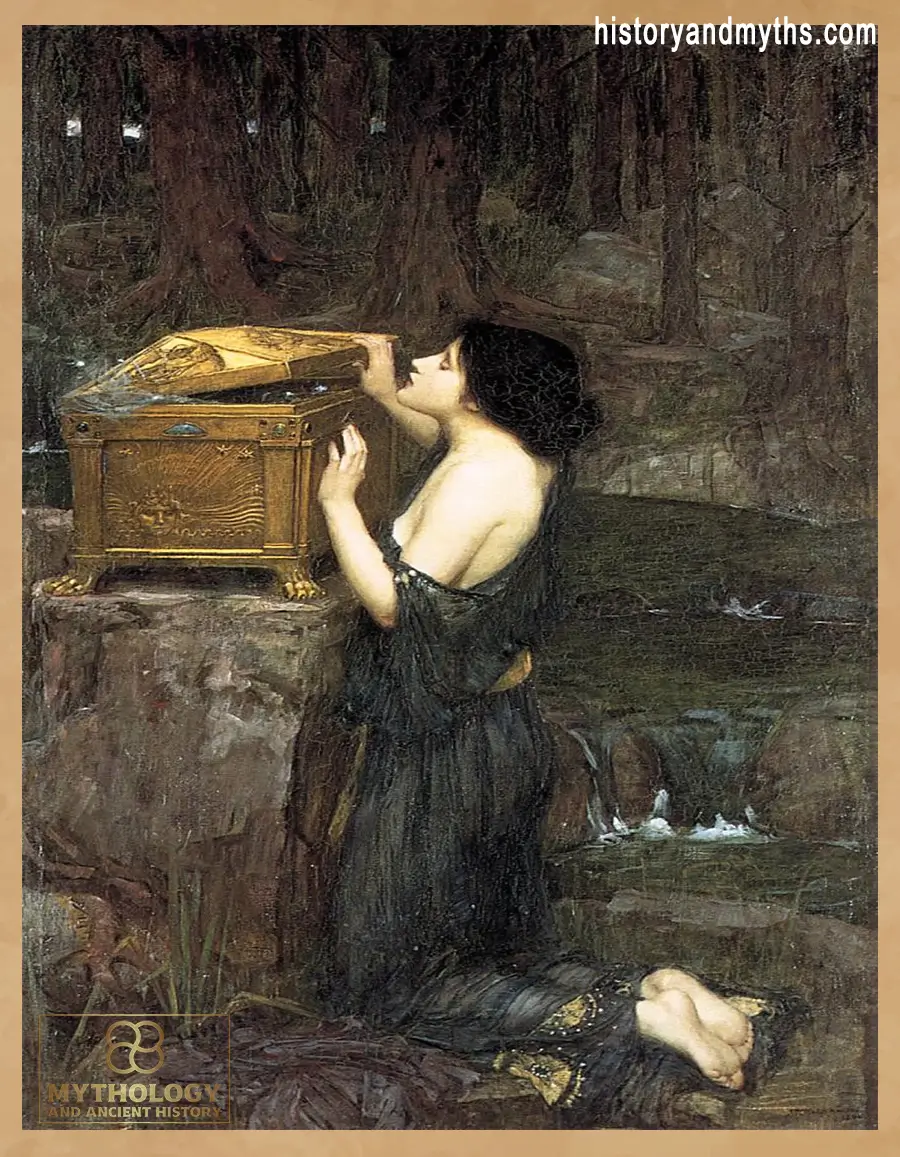
Elpis and the Pandora Myth: The Hope That Stayed Behind
The story of Elpis begins at the threshold of human suffering — the moment when Pandora, the first woman, opened the divine jar sent by Zeus. From it rushed every sorrow known to humankind: disease, grief, envy, and death. Yet, as the jar’s lid clattered shut, a single presence remained within — Elpis, Hope itself.
Ancient poets never agreed on why she stayed. Some said she remained by mercy, a gift of Zeus so that humanity might endure the pain unleashed. Others whispered it was a cruel irony — that hope, trapped away, could never truly comfort mortals. But most Greeks chose the kinder vision: that Elpis dwelled close to humankind, unseen but ever-present, waiting in every soul that refuses to yield.
To them, her confinement was not punishment but protection. The world’s evils had escaped beyond recall, but Hope was preserved in safety — so that whenever despair came, her spirit could still be found. And so, in the heart of Pandora’s tragedy, the Greeks placed the seed of redemption: that even the gods, in their wrath, left mankind one light against the dark.
| Aspect | Details |
|---|---|
| Name | Elpis (Ἐλπίς) — Greek Goddess of Hope |
| Domain | Hope, expectation, endurance, renewal |
| Parents | Zeus and Nyx (in some traditions), or born from Pandora’s jar |
| Symbol | Flower, cornucopia, uplifted gaze, or light emerging from darkness |
| Roman Equivalent | Spes — the Roman Goddess of Hope |
| Associated Deities | Pheme (Fame), Eirene (Peace), Dike (Justice), Aletheia (Truth) |
The Meaning of Elpis: Hope as the Last Divine Gift
To the ancient Greeks, Elpis was not naïve optimism — she was spiritual endurance. Her name meant “expectation,” a quiet anticipation that something good might still emerge from ruin. Where other divine forces commanded nature or justice, Elpis represented the inner force that keeps the soul alive when all else has failed.
Philosophers saw her as a paradox: hope was both a blessing and a burden. Hesiod hinted that perhaps Zeus allowed her to remain in Pandora’s jar not out of kindness, but to teach humanity patience — to make them wait for what they desire, never certain but never despairing. Later thinkers, like Plutarch, described Elpis as the “last companion of humankind,” the one spirit that refuses to abandon the mortal race.
Yet, Elpis was not blind faith. In her, the Greeks saw a form of resilient wisdom — the courage to believe in light while fully aware of darkness. She was neither illusion nor denial, but an acknowledgment that to live is to hope. Without her, the human story would end at suffering; with her, it continues despite it.
Elpis as a Goddess: The Spirit That Endures Beyond Despair
Though Elpis appeared briefly in myth, her influence stretched far beyond Pandora’s tale. The Greeks revered her as a minor goddess — a daimona — the divine embodiment of hope itself. She did not possess temples or cults like Athena or Apollo, yet her presence was felt in every prayer uttered during hardship, every wish whispered before sleep.
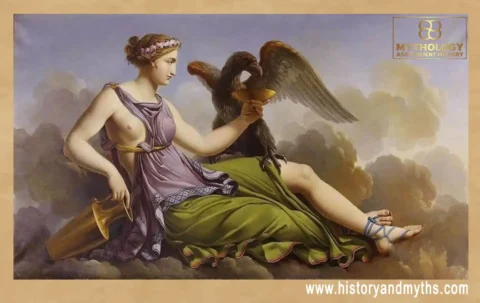
In art, Elpis was sometimes imagined as a young woman holding a flower or a cornucopia, symbols of life and renewal. Her face was calm, not joyous — for she represented not shallow cheer, but steady perseverance. When crops failed or wars began, the Greeks said that Elpis still walked among them, unseen yet powerful, softening the hearts of those who wished to surrender.
Unlike other virtues, she belonged equally to gods and men. Even Zeus himself, in his wisdom, kept Elpis close — for even divine justice needs compassion to endure. Thus she became the balance of divine severity and mortal endurance, the gentle breath that keeps the world from falling completely into despair.
The Paradox of Hope: Blessing or Delusion?
Among philosophers, Elpis stirred debate that lasted centuries. Was hope a divine gift, or a subtle deception crafted to keep mortals obedient? Even the ancients were divided. In Hesiod’s verses, her remaining inside Pandora’s jar can be read two ways — either she was preserved as a mercy, or imprisoned so that mankind would never grasp complete comfort.
For Epicurus, hope was a fragile illusion, a promise that postpones pain but never removes it. Yet for the Stoics, Elpis was an inner virtue, the will to live in alignment with reason — to hope wisely, not blindly. They saw her as the soul’s final defense, a spark of divine order glowing even within despair.
Thus, the Greeks never worshiped Elpis as a savior but as a mirror of human truth. To hope was to admit weakness, but also to acknowledge courage. It was the line between endurance and delusion, between waiting and acting. She reminded mortals that hope without action is emptiness, yet without hope, no action would ever begin.
And so, Elpis embodied both light and shadow — a goddess both merciful and ironic, offering comfort that demands wisdom to understand.
🔷 Essence of Elpis — The Light That Remained
- Greek Name: Ἐλπίς (Elpis) — meaning “expectation” or “hope.”
- Nature: Spirit (daimona) and minor goddess symbolizing hope, endurance, and renewal.
- Mythic Role: The last spirit remaining in Pandora’s jar — the divine gift that balances human suffering.
- Symbols: Blooming flower, light emerging from shadow, uplifted hands, or cornucopia of life.
- Philosophical Meaning: Hope as wisdom, the courage to continue despite despair; not blindness but clarity.
- Modern Legacy: The concept of Elpis lives on in psychology and art as the universal human will to endure.
© historyandmyths.com — Educational use
Elpis and the Human Condition: The Quiet Strength of Continuance
To the Greeks, Elpis was not worshiped through rituals but through survival. Every time a farmer sowed seeds after a drought, every time a mother prayed for her child’s return, or a poet wrote despite despair — that was an offering to Elpis. She did not demand hymns or temples, because she already lived within the act of enduring.
In the moral imagination of the ancients, Elpis marked the point where mortality and divinity touched. She was the divine echo within human resilience, the part of every soul that still believes in renewal after loss. The philosophers wrote that without Elpis, the human spirit would turn to stone — cold, unfeeling, motionless. With her, even sorrow could bloom into understanding.
In this way, Elpis was more than a myth; she was a psychological truth. The Greeks recognized that suffering was inseparable from life, but they also saw in Elpis the proof that life could still be beautiful because it continues. She was the gentlest goddess, yet her strength defined humanity’s survival. Through her, the Greeks expressed what remains timeless: that hope is not the denial of pain — it is the decision to rise despite it.
Elpis in Philosophy and Poetry: Hope as the Breath of the Soul
As Greek thought evolved from myth into philosophy, Elpis took on new meanings that transcended religion. In Parmenides and later Aristotle, hope was treated as a natural motion of the soul — a movement toward the good that has not yet come. For them, Elpis was not fantasy, but the vital energy of becoming.
Poets too gave her new life. Pindar called hope “the nurse of old age,” a companion who sustains men when strength has faded. Euripides wrote that “the man who has no hope is already dead,” echoing the sentiment that Elpis was not a luxury but a necessity — the invisible breath that keeps existence alive.
Even in times of darkness, her name appeared in the oaths of soldiers and the prayers of exiles. When Athens fell, when cities burned, people still whispered, Elpis menei — “Hope remains.” Her spirit endured as the most human of all divinities, the quiet goddess who gave meaning to suffering by refusing to let it have the final word.
In this way, Elpis became less a figure of worship and more a symbol of the soul’s endurance, the unseen thread that links courage to faith and faith to life itself.
Elpis in Art and Later Tradition: The Eternal Face of Hope
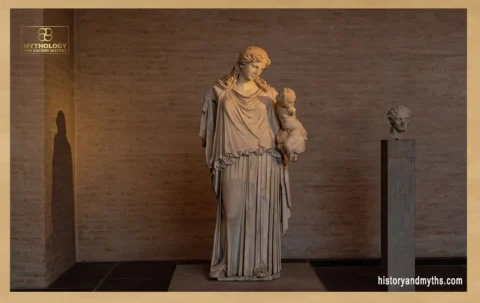
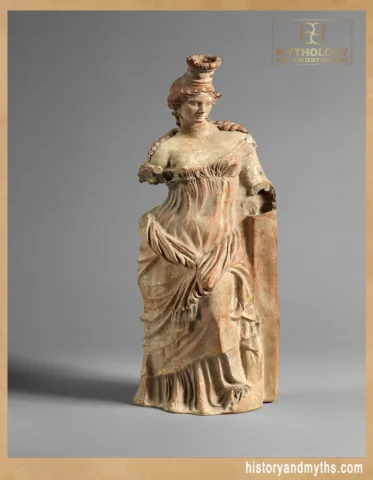
Though the ancient Greeks left no grand temples to Elpis, her image survived in sculpture, vase painting, and later Roman art. Artists often portrayed her as a young woman carrying flowers or a cornucopia, her gaze lifted toward the heavens. These symbols spoke of renewal, nourishment, and anticipation — the quiet certainty that tomorrow still matters.
In Rome, she was known as Spes, the goddess of Hope, and her likeness adorned imperial coins and reliefs. Emperors used her figure to proclaim stability and rebirth after turmoil — proof that even the state required divine hope to survive. The Roman poet Ovid described her as “the last to leave the hearts of men,” while others depicted her standing beside Fides (Faith) and Fortuna (Luck), completing the trio of life’s sustaining forces.
During the Renaissance, artists revived her with soft light and open hands, often blending her image with Christian allegories of Faith and Charity. In philosophy, she continued to echo through the ages: in Nietzsche, who called hope “the rainbow over the torrent of life,” and in Heidegger, who saw in her Greek name — Elpis, expectation — the essence of human becoming.
Thus, from marble to metaphor, Elpis never disappeared. Her face changes with each era, yet her meaning endures: she is the promise that existence, no matter how fragile, still leans toward light.
The Legacy of Elpis: Hope as Humanity’s Eternal Companion
Across centuries, Elpis has remained the most intimate of all Greek deities — not a goddess of distant power, but one who lives within every mortal heart. The ancients said that when all else failed, she alone stayed close to humankind; and so she has remained, reappearing in every age where despair has threatened to silence meaning.
In the modern world, her spirit breathes through art, literature, and everyday courage. Whenever people rebuild after ruin, seek truth after loss, or choose kindness in the face of fear, they echo the voice of Elpis. She has no altar but the will to begin again, no hymn but the quiet promise that life can still be good.
Elpis teaches that hope is neither denial nor escape — it is the wisdom to endure, the strength to look at darkness and still believe in dawn. In her we see the essence of what it means to be human: fragile yet unbroken, fearful yet forward-looking. Her myth endures not because of miracles, but because every generation rediscovers her truth — that hope is the last, and perhaps the first, gift of the gods.
Elpis and Modern Meaning: The Goddess Who Still Speaks to Humanity
Though born from the oldest of Greek myths, Elpis still lives wherever people confront despair with courage. She has become a universal symbol that transcends religion and time—a whisper of divine endurance in every act of rebuilding. Her myth teaches that even when the world seems emptied of blessings, hope remains the seed of renewal.
Philosophers and artists continue to reinterpret her essence. To the existentialists, she is the refusal to accept meaninglessness; to psychologists, she is the mind’s most powerful survival instinct. In literature and cinema, her shadow lingers over every story where humanity perseveres against the odds.
In truth, Elpis never left Pandora’s jar, because she was never meant to. She lives within it still—within every heart that holds on, however faintly, to the promise of dawn. For as long as mankind continues to dream, rebuild, and believe, the gentle goddess of Hope will remain beside them — unseen, but eternal.
Conclusion — When Hope Becomes the Divine Within
From the depths of Greek myth to the quiet corners of modern life, Elpis stands as the immortal reminder that hope is not weakness but will — the power that makes endurance sacred. The ancients placed her at the end of Pandora’s tale because they knew that without hope, even wisdom would wither; yet with it, humanity could rise again from ruin.
Elpis is the voice that tells every soul, “continue.” She is not blind faith but the steady light that sees darkness and moves through it. In her reflection, we glimpse what the Greeks understood better than most — that to hope is not to deny reality, but to affirm that reality is not yet complete.
And so, the goddess of Hope still breathes among us. She asks for nothing but belief — not in miracles, but in the possibility that what we do, endure, and create still matters. In that belief lies her divinity, and in her divinity, the endless heart of humankind.
🔹 Key Takeaways — Elpis, the Greek Goddess of Hope
- Elpis represents the divine spirit of hope — the final light that remained in Pandora’s jar when all evils escaped.
- She is a daimona or minor goddess symbolizing endurance, renewal, and the will to continue despite despair.
- Her myth expresses the Greek understanding of hope as both gift and paradox — mercy that can sustain or deceive.
- Philosophers saw her as the soul’s motion toward the good, the strength that gives meaning to human struggle.
- In Roman mythology, she became Spes, the goddess of Hope, and her image appeared on imperial art and coins.
- Elpis endures today as the universal symbol of resilience, faith, and rebirth — proof that even after ruin, humanity still dreams.
Frequently Asked Questions about Elpis
1. Who is Elpis in Greek mythology?
Elpis is the Greek goddess and spirit of Hope, the divine force that remained in Pandora’s jar after all evils escaped into the world.
2. What does the name Elpis mean?
The Greek word Elpis (Ἐλπίς) means “expectation” or “hope,” representing the anticipation of good amid suffering.
3. What is Elpis’s role in the story of Pandora?
Elpis was the only spirit left inside Pandora’s jar, symbolizing that hope stayed with humanity even after despair entered the world.
4. Is Elpis a goddess or a concept?
She is a daimona — a divine personification of hope, treated as a minor goddess embodying human endurance and optimism.
5. Who are Elpis’s parents?
Sources differ, but she is often described as the daughter of Zeus and Nyx (Night) or as a spirit born from Pandora’s jar.
6. What are the symbols of Elpis?
Elpis is often depicted holding a flower or a cornucopia, representing renewal, light, and the promise of life after hardship.
7. What is Elpis’s Roman equivalent?
Her Roman counterpart is Spes, the goddess of Hope, who appeared in Roman art and coins as a symbol of renewal and prosperity.
8. What does Elpis teach about hope?
Her myth teaches that hope is not denial of pain but the strength to continue despite it — a balance between faith and reason.
9. Why did hope stay in Pandora’s jar?
Some believed Zeus kept Elpis inside to protect her from corruption; others saw it as mercy, ensuring that hope would always remain close to mankind.
10. How is Elpis viewed today?
Elpis remains a universal symbol of resilience and renewal, representing humanity’s eternal ability to endure, rebuild, and believe again.
Sources & Rights
- Hesiod, Works and Days, translated by Hugh G. Evelyn-White (Loeb Classical Library, 1914).
- Pindar, Odes, Book VI, edited by William H. Race (Harvard University Press, 1997).
- Plutarch, Moralia — “On Superstition and Hope”, translated by Frank Cole Babbitt (Loeb Classical Library, 1936).
- Ovid, Metamorphoses, Book I — trans. Rolfe Humphries (Bloomington: Indiana University Press, 1955).
- Theoi Project — “Elpis (Greek Goddess of Hope)” and “Spes (Roman Equivalent)” entries, classical source summaries and iconography catalogue.
- Plato, Philebus and Republic — philosophical references to Elpis as anticipation of good within the human psyche.
- J. Bremmer, “Pandora’s Jar and the Gift of Hope,” in Interpretations of Greek Mythology, edited by Jan Bremmer (London: Routledge, 1987).
- Nietzsche, Friedrich. Human, All Too Human — aphorism on hope as “the rainbow over the torrent of life.”
Written by H. Moses — All rights reserved © Mythology and History.