Ourea: Ancient Greek Mountain Gods — The Silent Children of Gaia
Before the Olympians raised their thrones in the clouds, the mountains themselves were already divine. To the early Greeks, the peaks that pierced the horizon were not mere stone and shadow but living presences — ancient beings who stood between earth and sky. Every summit was sacred, every slope a threshold between the mortal and the eternal. These were the Ourea, the primal spirits of the mountains, silent yet immortal children of Gaia, born before humankind ever named the gods.
The Greeks imagined them not as human figures but as the essence of height and endurance — beings of rock, mist, and time. While rivers and winds moved restlessly, the mountains endured, embodying the strength and permanence of the earth itself. To live in their shadow was to dwell in the company of divinity. The shepherd who climbed their ridges, the hermit who prayed upon their cliffs, all felt the same truth: that the Ourea did not speak, but their silence was older than language.
Unlike the Olympians who ruled through thunder or law, the Ourea ruled through presence. They needed no temples, no statues, no hymns. Their worship was the awe of those who gazed upward — the realization that in every towering shape of stone, Gaia still breathed. To the ancient mind, these mountains were the first temples of the gods and the last witnesses of creation.
Origins and Nature of the Ourea
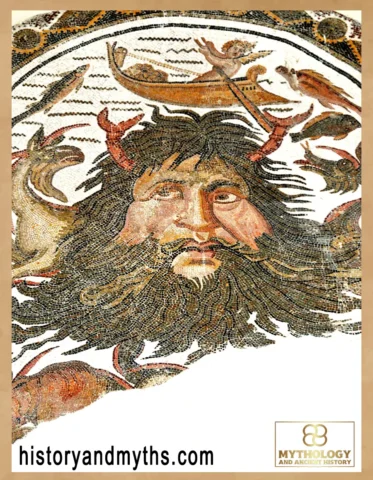
In the beginning, before the reign of Zeus or even the birth of the Titans, the Earth itself stirred and brought forth life without mate or union. From her boundless body came three elemental forces that would shape all existence: Uranus, the sky; Pontus, the sea; and the Ourea, the mountains. Hesiod tells us that Gaia bore them “without love, in the solitude of her strength,” suggesting that they were not born from desire but from necessity — the need for stability, height, and permanence in the forming world.
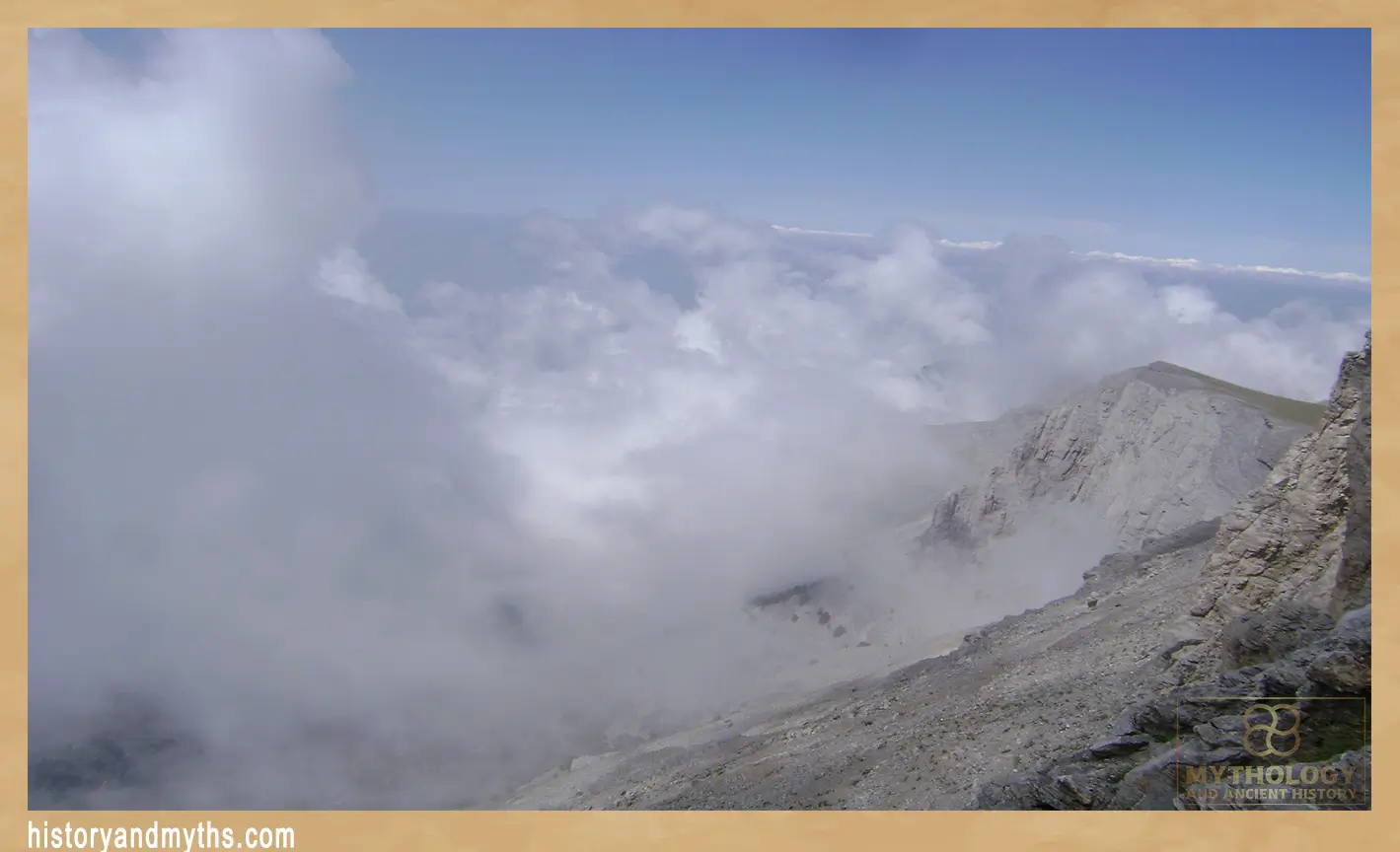
The Ourea were not gods of personality or story; they were the divine embodiment of the mountain itself. Each of Greece’s sacred peaks was believed to have its own Ourea — an indwelling spirit that granted the land its soul. Mount Olympus, Helicon, Parnassus, and Othrys were not just places but presences. The Greeks did not distinguish between the physical mountain and its god; to climb its slopes was to approach divinity directly.
In essence, the Ourea represented the spiritual backbone of the Earth. They were neither benevolent nor wrathful, for they had no passions. Instead, they symbolized constancy in a world defined by change. Where the sea roared and the winds shifted, the mountains remained unmoved — ancient, enduring witnesses to the rise and fall of gods and mortals alike.
Their stillness was not absence but power — a reminder that the divine can exist in silence, in the unmoving strength of nature itself. And though no myths were told of their deeds, their very presence shaped the landscape of Greek belief, grounding the heavens and the underworld alike between their stony roots and snowy crowns.
| Aspect | Details |
|---|---|
| Name | Ourea — Primordial spirits or deities of the mountains in Greek mythology |
| Parentage | Born from Gaia (Earth) alone, without a father, as described by Hesiod in the Theogony. |
| Nature | Embodiments of the mountains themselves — divine yet silent, representing stability and endurance. |
| Major Mountains (Ourea) | Olympus, Helicon, Parnassus, Othrys, Pelion, and others, each considered sacred and alive with spirit. |
| Domain | Mountains, sacred landscapes, thresholds between Earth and Heaven. |
| Symbolism | Stillness, strength, endurance, and the eternal balance of nature. |
| Worship | No temples or priests; reverence through awe, pilgrimage, and poetic invocation of sacred peaks. |
| Associated Deities | Gaia (Earth), Uranus (Sky), Pontus (Sea) — the three primal offspring of Earth representing height, depth, and expanse. |
The Sacred Mountains of Greece
To understand the Ourea, one must look not to the myths of heroes, but to the peaks themselves. Each mountain of Greece carried its own divine essence, a presence so strong that poets and pilgrims alike treated it as a living god. Mount Olympus, crowned with storms and sunlight, was the throne of Zeus and the eternal meeting place of the Olympians. Mount Helicon inspired the Muses; Parnassus sheltered Apollo and the prophetic breath of the Oracle at Delphi; Othrys was the stronghold of the Titans before the Olympian rule. All these peaks were the bodies of the Ourea — the mountains not as objects, but as souls.
The ancients saw no boundary between the natural and the divine. When a cloud crowned a summit, it was thought to be the breath of the gods; when thunder echoed among the ridges, it was the heartbeat of the Ourea themselves. Shrines were built not to replace the mountain, but to honor its spirit. Even the most human temples borrowed the form of cliffs and ridges — steps rising toward heaven, columns rooted in stone.
The mountains stood as both barriers and bridges — separating realms, yet linking earth with the divine. To ascend them was an act of purification, a metaphor for the soul’s own climb toward clarity. In that sacred geography, the Ourea became silent teachers: unchanging, immovable, but always pointing upward toward the eternal.
Symbolism and Philosophy of the Ourea
In Greek thought, the Ourea embodied more than landscape — they represented the essence of endurance and sacred stillness. While rivers moved and winds shifted, mountains stood as the eternal witnesses of creation. Philosophers and poets saw in their silence the truest form of wisdom: the strength to remain, unshaken by time. The Ourea were the Earth’s memory — vast, immovable, and ancient beyond reckoning.
For the early thinkers, this immovability carried moral and spiritual meaning. The mountains taught that greatness was not noise or motion, but permanence and depth. Just as their roots reached unseen into the earth, so too did wisdom and virtue grow from hidden foundations. Their peaks, reaching toward the sky, symbolized the ascent of the soul toward divine understanding — a living axis between matter and spirit.
The poets of the classical age turned this philosophy into art. They wrote of Helicon as a place where inspiration flowed from the mountain’s heart, and of Parnassus as a stairway for Apollo’s light. Even the myths of Olympus — where gods quarreled and loved above the clouds — were shaped by the older, quieter divinity of the Ourea. Every Olympian temple built upon a peak was, in truth, an acknowledgment of their presence.
The Ourea thus became the unseen foundation of Greek religion — not worshiped through offerings, but revered through awareness. To the Greek mind, the divine was not confined to statues or hymns; it was carved into the world itself. The Ourea reminded humankind that holiness lies not only in the heavens, but in the ground beneath one’s feet.
Ourea — The Divine Mountains of Ancient Greece
- The Ourea were the primordial spirits of mountains, born directly from Gaia without a father.
- Each major mountain — such as Olympus, Helicon, and Parnassus — was viewed as the living body of an Ourea.
- They represented stability, strength, and sacred silence, embodying the Earth’s eternal endurance.
- Unlike Olympian gods, the Ourea had no temples or rituals — their worship was the awe inspired by nature itself.
- Philosophers later saw them as symbols of the soul’s ascent toward divine understanding — motionless, but reaching for the heavens.
© historyandmyths.com — Educational use
Worship and Legacy of the Mountain Spirits
Unlike the Olympian gods who delighted in offerings and festivals, the Ourea were worshiped through reverence, not ritual. They had no temples, no priesthood, and no idols carved in their image. Their worship was performed in silence — by travelers who paused to gaze at a summit glowing with sunrise, by shepherds who felt the wind curl around the cliffs, by poets who heard in the mountain’s echo a voice older than speech. To honor the Ourea was to recognize the divinity within nature itself.
Some mountain peaks were treated as sacred dwellings rather than deities themselves. Mount Olympus, for example, became the celestial palace of the gods, while Helicon and Parnassus were revered for their connection to the Muses and Apollo. But beneath these associations lay the deeper truth that all mountains shared one spirit — that the Earth, through the Ourea, continued to breathe and endure. The ancient Greeks did not need to personify the mountains with faces or stories; their majesty was their myth.
Through time, the idea of the Ourea transformed but never vanished. In later Hellenistic philosophy, mountains came to symbolize the soul’s ascent toward divine understanding, a metaphor that echoed in Neoplatonic and early Christian thought. Artists and poets across centuries returned to the same image — the still mountain, rising from chaos toward light — as the emblem of order within the natural world.
Even in modern Greece, where ancient myths have long turned to legend, the mountains still carry their sacred presence. The Ourea live not in marble or scripture but in the quiet dignity of stone, in the shadow that stretches at sunset across the land they first raised from the sea. They remain, as ever, the steadfast guardians of the earth — unspoken, unmoved, and eternal.
Conclusion: The Eternal Presence of the Ourea
The Ourea are the oldest of gods and yet the quietest. They do not appear in the councils of Olympus, nor do they speak in the language of men. Their message is carved into stone and silence. To the ancient Greeks, they were the Earth’s pulse — the sacred stillness that underlies all creation. They existed before myth, before law, before worship; they were the ground upon which divinity itself was built.
Their endurance gave the world its shape. The mountains were Gaia’s first children, and through them, the Greeks learned that holiness could dwell in matter — that even stone could hold a spirit. While the gods of the sky reigned in glory and the gods of the sea raged in motion, the Ourea taught a quieter truth: that strength lies in stillness, and eternity in patience.
Today, long after temples have fallen and myths have faded, their presence remains. Every mountain rising against the dawn, every peak veiled in mist, is a reminder of those silent deities. The Ourea endure not because they demand faith, but because they embody it — steadfast, vast, and eternal as the Earth itself.
Key Takeaways
- The Ourea were primordial deities symbolizing the divine essence of mountains, born from Gaia alone.
- They embodied stillness, endurance, and sacred stability — the eternal pillars of the Earth.
- Each mountain, from Olympus to Helicon, was believed to possess its own Ourea spirit.
- Their worship took the form of awe and reverence for nature rather than organized ritual or temples.
- In Greek thought, they symbolized the soul’s ascent toward the divine — motionless yet striving toward heaven.
Ourea — FAQ
Who are the Ourea in Greek mythology?
The Ourea are the primordial deities or spirits of mountains, born directly from Gaia, the Earth, without a father.
What does the name “Ourea” mean?
In ancient Greek, “Ourea” (Οὔρεα) literally means “mountains,” representing their personification as divine beings.
Who was the mother of the Ourea?
The Ourea were the children of Gaia, the primordial Earth goddess, born alongside Uranus (the sky) and Pontus (the sea).
Were the Ourea worshiped by the ancient Greeks?
They had no temples or formal cults; their worship was expressed through reverence for the mountains themselves.
What did the Ourea symbolize?
They represented stability, endurance, and the eternal presence of nature — the strength of the Earth in its highest form.
Which mountains were associated with the Ourea?
Mount Olympus, Helicon, Parnassus, and Othrys were among the sacred peaks considered embodiments of the Ourea.
How did the Greeks view the mountains spiritually?
Mountains were seen as sacred thresholds between Earth and Heaven — homes of gods and symbols of divine order.
Do the Ourea appear in myths or stories?
They rarely appear in mythic tales; instead, they serve as cosmic presences representing the enduring body of the Earth.
Are the Ourea connected to other primordial deities?
Yes. They are siblings of Uranus (Sky) and Pontus (Sea), together forming Gaia’s earliest creations of the natural world.
What is the philosophical meaning of the Ourea?
They symbolize the soul’s stillness and strength — the idea that wisdom, like the mountain, stands unmoved through time.
Sources & Rights
- Hesiod, Theogony, trans. Hugh G. Evelyn-White, Loeb Classical Library No. 57, Harvard University Press, 1914.
- Apollodorus, The Library, trans. Sir James George Frazer, Harvard University Press, 1921.
- Hard, Robin. The Routledge Handbook of Greek Mythology. Routledge, 2004.
- Morford, Mark P. O. & Robert J. Lenardon. Classical Mythology. Oxford University Press, 10th ed., 2013.
- Graves, Robert. The Greek Myths. Penguin Books, 1955.
- Theoi Project. “Ourea — Mountains of Greek Mythology.” Based on ancient sources and museum records.
Written by H. Moses — All rights reserved © Mythology and History